Boost Memory Focus Puzzle Strategies for Cognitive Enhancement
Unlocking the Power of Puzzles
Puzzles and mind games are more than just a source of entertainment; they play a crucial role in enhancing our cognitive capabilities. Engaging in these activities can significantly improve memory and concentration, making them essential tools for anyone looking to boost their mental acuity. With an increasing number of studies highlighting the benefits of brain training games, it’s becoming clear that our leisure time can be productive.
The Importance of Cognitive Challenges
As we navigate through daily life, mental sharpness is vital for success in both personal and professional realms. Puzzles not only challenge our intellect but also keep our brains active, which is crucial for long-term cognitive health. This article will explore a variety of strategies that leverage puzzles to promote memory and focus.
What to Expect
In the sections to follow, we will delve into the Top 5 strategies for using puzzles to enhance cognitive abilities. Each strategy comes with its share of fascinating insights and practical applications, inviting you to engage more deeply with the world of mind games. Prepare to uncover the secrets behind effective cognitive training through the lens of puzzles.
DISCOVER MORE: Click here to unlock your creative potential
Top 5 Strategies of Puzzles to Enhance Memory and Concentration
In a world inundated with stimuli and constant interruptions, the significance of fine-tuning our memory and concentration has never been more apparent. The rapid pace of modern living demands acute mental acuity to manage daily tasks effectively. Amidst these challenges, puzzles emerge as a beacon of cognitive enhancement, offering not just simple entertainment but profound benefits for brain health. This article delves into the top five strategies derived from a diverse range of puzzles and mind games that can significantly bolster memory and concentration skills.
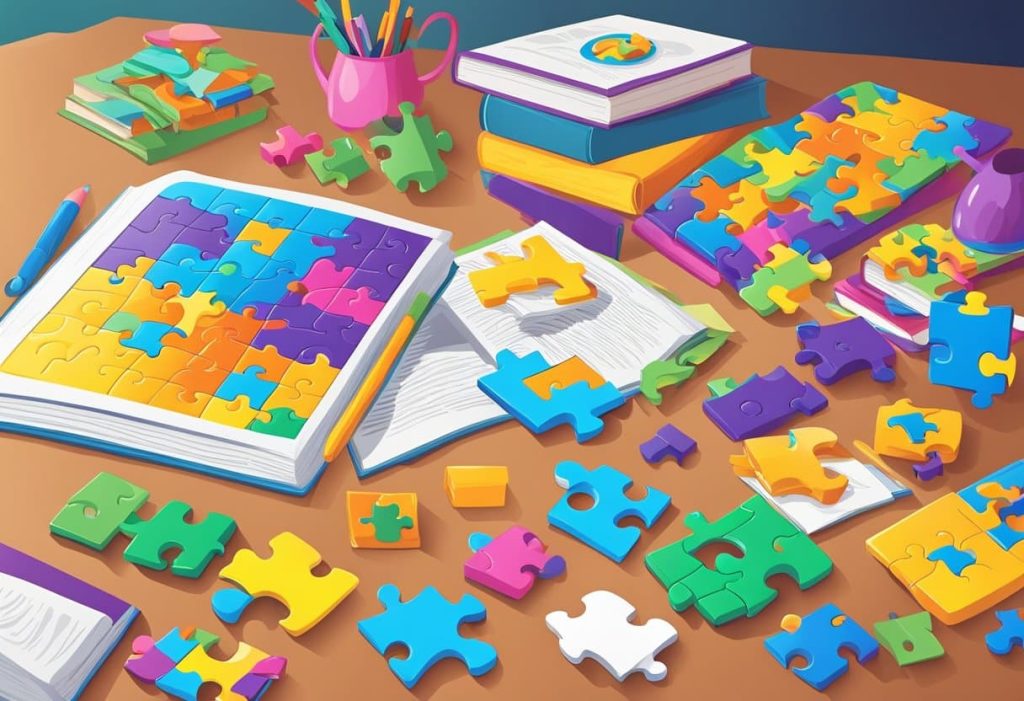
5. Jigsaw Puzzles: Piecing Together Focus
While jigsaw puzzles might seem like a mere pastime, they provide a surprising depth of cognitive development. The process involves more than just fitting pieces together; it engages and activates various brain processes. As you navigate through numerous pieces, identifying shapes and colors and visualizing the final picture, both your short-term and long-term memory are put to work. It has been suggested in studies, such as those published in the journal Psychology and Aging, that regular engagement with jigsaw puzzles enhances problem-solving capabilities and memory retention.
Jigsaw puzzles require a strategic approach and critical thinking. This cognitive activation means using different parts of your brain simultaneously. Moreover, the act of placing puzzle pieces into their correct spots enhances hand-eye coordination, which subsequently aids concentration and fine motor skills. Additionally, the calming, repetitive nature of the activity is found to be a powerful stress reduction tool, which is essential because a stress-free mind can focus more effectively on other tasks.
4. Crossword Puzzles: Language as a Tool for Memory
Moving into the realm of language, crossword puzzles serve as an exceptional tool for boosting vocabulary and memory. The very act of deciphering clues and recalling word associations nurtures your brain’s memory circuits. Regular engagement in crosswords enriches language skills which inherently improves recall abilities. Interestingly, crosswords can be customized to different skill levels, broadening their accessibility and appeal.
Engaging with crosswords is a dynamic way to boost language skills. Exposure to new words improves your verbal prowess, enabling better memory retention. By drawing connections between words and hints, crosswords enforce memory reinforcement, strengthening cognitive pathways necessary for memory enhancement. Furthermore, completing crosswords socially can be advantageous; it creates social connections and promotes shared learning experiences, offering both cognitive and emotional benefits.
3. Sudoku: A Numerical Approach to Cognitive Function
Sudoku, the popular number-placement puzzle, is a powerhouse for concentration and logical reasoning. The game’s unique requirement to utilize deductive logic for filling in grids fosters an environment of focused attention. This intense concentration influences your ability to maintain focus on various tasks, a valuable skill in today’s distracting world. Moreover, this puzzle enhances your working memory, crucial for activities requiring active thought processing.
By encouraging a methodical and orderly approach, Sudoku enhances analytical thinking. This, in turn, helps the brain to develop structured thinking patterns. Engaging consistently with such puzzles also inculcates patience, teaching persistence in the face of challenging grids. Recognizing underlying patterns is another benefit, as it improves pattern recognition, thus sharpening your overall mental agility.
2. Memory Games: Training the Mind
Memory games, such as the ever-popular card flip game, are explicitly designed to improve memory retention. These games’ primary goal is straightforward: remember card locations and find matches. Although simple in premise, these games significantly boost cognitive function through repetition and active engagement.
Emphasizing the principle of focused attention, memory games cultivate the ability to concentrate, an essential skill for continuous learning. This regular practice trains your brain, strengthening neural connections that underpin memory. Frequently engaging in such games also often involves a competitive spirit, stimulating intense focus through friendly rivalry, which can further amplify cognitive benefits.
1. Brain-Training Apps: The Future of Cognitive Development
Finally, brain-training apps represent the forefront of cognitive enhancement strategies. Applications such as Lumosity and Elevate offer a customizable array of games tailored to challenge and strengthen various cognitive domains. These platforms utilize adaptive algorithms to propose personalized challenges targeting not only memory but also processing speed and mental acuity.
Modern research supports the idea that consistent engagement with brain-training apps leads to measurable improvements. The concept of personalized training ensures that exercises are tailored to individual proficiency levels, enhancing both motivation and effectiveness. Consequently, users experience an increase in neural processing speeds, demonstrating a tangible improvement in how quickly their brain performs cognitive tasks.
In summary, puzzles offer indispensable tools for enhancing cognitive abilities. Whether through the tangible hands-on approach of jigsaw puzzles or the digital realm of brain-training apps, each strategy provides unique pathways for boosting memory and concentration. As we navigate the complexities of modern life, these tools not only nurture our cognitive health but also offer enjoyable and meaningful ways to engage with our mental faculties.
| Category | Details |
|---|---|
| Cognitive Development | Engaging in puzzle strategies significantly enhances problem-solving skills and enhances the ability to think critically. Individuals who regularly tackle puzzles tend to develop a sharper cognitive ability. |
| Memory Enhancement | Puzzles are excellent for challenging memory retention. By recalling patterns and strategies, players can improve their short-term and long-term memory, leading to enhanced overall memory performance. |
| Focus and Concentration | Regular puzzle practice trains the brain to focus better on tasks. The complex nature of puzzles fosters increased concentration skills, allowing individuals to filter out distractions effectively. |
| Social Interaction | Engaging in puzzle-solving can be a social activity that improves social skills. Collaborating with others on puzzles promotes teamwork and can lead to building meaningful relationships. |
DIVE DEEPER: Click here to uncover more benefits
FAQs on Puzzle Strategies for Enhancing Memory and Concentration
How do puzzles help in improving memory?
Puzzles are designed to challenge the brain, engaging various cognitive processes. When you work on a puzzle, you activate both the left and right hemispheres of your brain, promoting connections and improving mental speed. This increased activity can lead to enhanced short-term memory by allowing you to memorize patterns and develop problem-solving skills, which can then be applied to everyday scenarios. The consistent practice of puzzles has shown to delay the onset of neurodegenerative diseases, like Alzheimer’s, according to various studies.
What types of puzzles are most effective for concentration?
There are numerous types of puzzles that can enhance concentration. Jigsaw puzzles are excellent for improving visual-spatial reasoning, while Sudoku offers a robust challenge for logic and number arrangements. Crossword puzzles expand vocabulary and verbal skills. Each type of puzzle requires specific attention, which helps to refine concentration levels. For instance, treating puzzle-solving as a daily mental workout can improve focus and attention span over time, similar to how physical exercise benefits the body.
Can puzzle-solving reduce stress and anxiety?
Engaging in puzzles provides a meditative form of focus, which is beneficial in reducing stress. The act of concentrating on a puzzle can shift your focus away from anxious thoughts and provide a sense of calm. Completing a puzzle, no matter its difficulty, results in a feeling of achievement that can uplift mood and instigate a release of dopamine, the feel-good neurotransmitter. This makes puzzles a therapeutic tool, often recommended for stress relief and mental clarity.
How often should one engage with puzzles to see cognitive benefits?
Consistency is key when it comes to reaping cognitive benefits from puzzles. Engaging with puzzles on a daily basis, even for just 15-30 minutes, can provide significant improvements in memory and concentration over time. The regular challenge not only brightens your mood but also keeps your brain sharp. Research suggests that making puzzles a part of your routine can foster long-term cognitive resilience, especially as you age.
Is there a specific age group that benefits most from puzzle-solving?
Puzzle-solving is advantageous across all age groups. For children, puzzles enhance motor skills and problem-solving capabilities, laying a strong foundation for more complex skills in the future. For adults, puzzles help maintain and even improve memory and concentration. For older adults, puzzles serve as a critical tool to keep the brain engaged, which can help fend off memory-related issues. The universal appeal of puzzles is that they offer scalable challenges suitable for any age, making them an ideal lifelong activity.
DISCOVER MORE: Click here to learn how teamwork can be enhanced
Conclusion: Enhancing Memory and Concentration through Puzzles
The exploration of strategies for improving memory and concentration through puzzles sheds light on the intriguing world of cognitive enhancement. Throughout the article, we have discovered that engaging in puzzles goes beyond simple entertainment; it plays a vital role in sharpening the mind and enhancing cognitive functions. This ancient form of mental exercise has been scientifically linked to improved memory, heightened concentration, and even the prevention of cognitive decline in later years.
By utilizing a diverse range of puzzles, from crosswords and Sudoku to more modern brain-training applications, individuals can tailor their approach to suit their personal cognitive goals. Regularly exercising different parts of the brain through these various puzzles not only aids in maintaining mental agility but also fosters problem-solving skills and adaptability, which are essential in our fast-paced world.
The top strategies highlighted include consistency in puzzle practice, choosing appropriately challenging puzzles, combining different types of puzzles for comprehensive cognitive engagement, and allowing for timed sessions to improve focus. Together, these tactics provide a roadmap for anyone looking to boost their mental capabilities in a structured yet enjoyable manner.
In essence, puzzles offer an accessible and effective way to promote better brain health. By incorporating these strategies into your routine, the potential benefits extend beyond mental prowess, impacting overall well-being. Therefore, it is evident that puzzles are not just a leisure activity but a powerful tool for enhancing memory and concentration.
As the conversation around cognitive health continues to evolve, further investigation into this ancient yet innovative discipline is encouraged. Embracing the potential of puzzles could lead to groundbreaking discoveries in mental fitness, offering new possibilities for enhancing cognitive functions in the years to come.