
The Impact of Age on Problem Solving Strategies in Puzzles
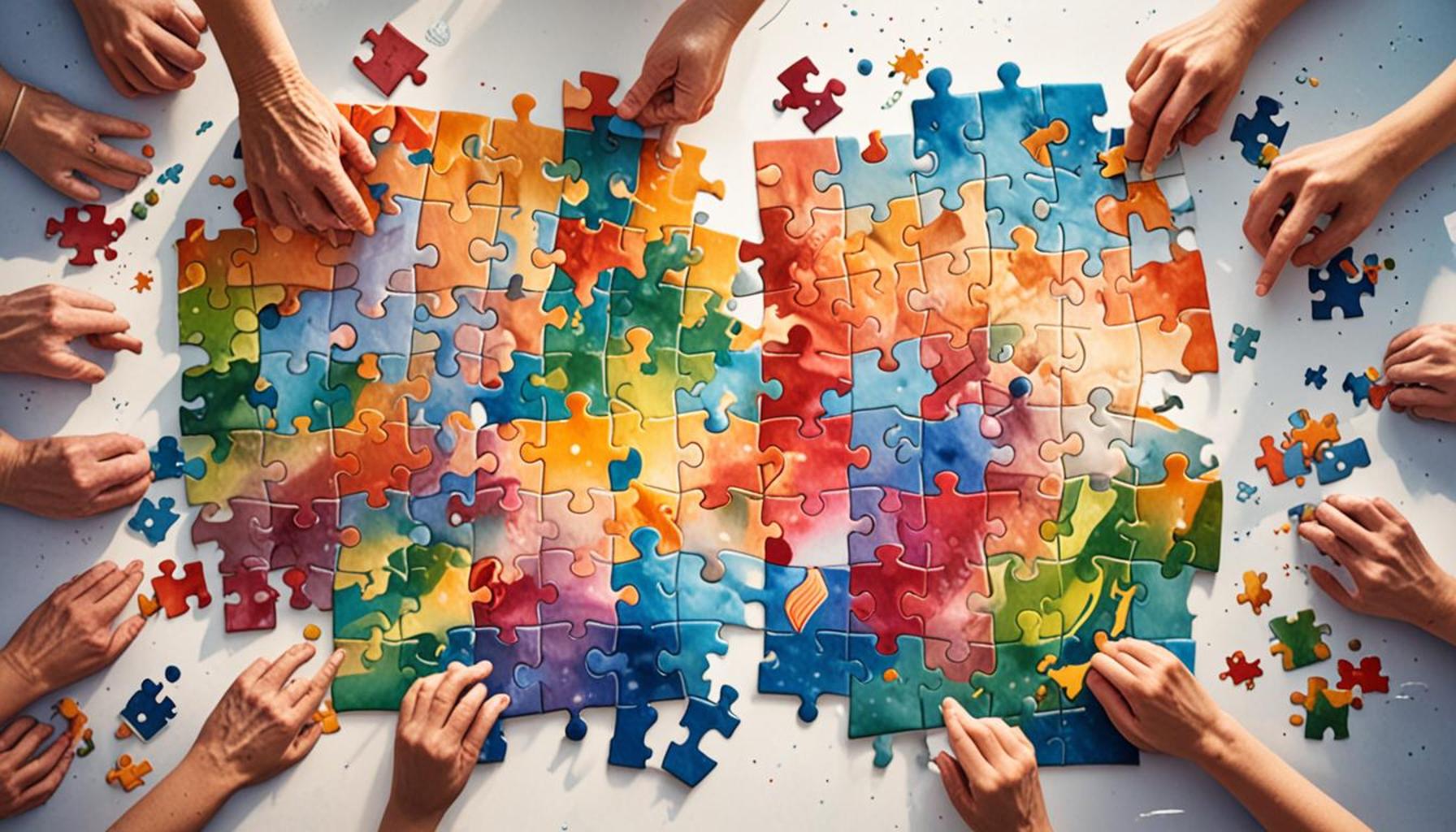
The Intersection of Age and Problem Solving in Puzzles
The realm of puzzles offers a vibrant microcosm of human cognition, revealing fascinating insights into how we tackle challenges at different stages of life. From the intricate pieces of jigsaw puzzles to the cryptic clues in crosswords, each generation approaches these tasks with distinctive strategies shaped by various factors.
One pivotal element in this equation is cognitive development. Youngsters, still in the prime of their mental acuity, often draw on their capacity for rapid thinking and keen pattern recognition. For example, studies show that children and teenagers, often adept at digital puzzles or mobile games, utilize their quick reflexes and fluid problem-solving techniques to decode solutions. This gives them an edge in formats that require immediate responses, like timed quizzes or speed-based challenges.
In contrast, the older generation brings forth a wealth of experience to the table, showcasing their ability to engage in strategic thinking. This experience is especially evident in traditional puzzle formats, such as Sudoku or chess. Older adults, often more patient and methodical, may take time to analyze patterns deeply, drawing on decades of practice to find solutions that may escape the quicker, more impulsive approaches of their younger counterparts. This strategic depth can be seen in community centers across the United States, where older individuals often gather to tackle complex puzzles, sharing tips and fostering a sense of camaraderie.
Motivation and interest also play a critical role in these age-based differences in puzzle-solving. For instance, a study conducted by the Pew Research Center indicated that older adults engage in more puzzles as a means of cognitive maintenance, while younger individuals often see puzzles as a form of entertainment or competition. This divergence in motivation not only influences the types of puzzles chosen—whether they prefer solitary word searches or interactive app-based games—but also the level of enjoyment and engagement derived from the activity.
Research indicates that while youth might excel in creativity and speed, older individuals often demonstrate remarkable persistence and analytical skills. This combination of attributes fosters an enriching environment for cross-generational learning, where older generations impart wisdom and strategies to younger solvers, while the youth introduce fresh perspectives and innovative techniques. Educational programs targeting mixed-age groups can leverage these dynamics to enhance collaborative problem-solving experiences.
As researchers delve deeper into the nuances of how age affects puzzle-solving methods, they uncover valuable insights that could transform educational techniques and promote a more collaborative approach to critical thinking across all age groups. Encouraging intergenerational engagement not only enriches the minds of participants but also promotes a profound understanding of cognitive evolution throughout life. The interplay of these factors creates a compelling narrative about our shared cognitive journeys, encouraging us to appreciate the diverse strengths each age group contributes to the world of puzzles.
LEARN MORE: Click here to discover the benefits of logic games
Cognitive Evolution: How Age Shapes Puzzle Strategies
The journey through life’s various stages is often marked by significant changes in cognitive ability, and nowhere is this more apparent than in the world of puzzles. Age impacts the way individuals approach problem-solving, diverging into distinct methods that reflect both cognitive development and life experience. While the younger generation may excel in rapid responses and creative thinking, older adults tend to rely on established strategies honed over years of engagement with different types of puzzles.
Research illuminates these differences, indicating that younger puzzle solvers, typically those aged under 30, deploy intuitive and exploratory strategies when tackling challenges. In scenarios involving complex visual patterns or fast-paced gaming, their brains exhibit notable advantages in adaptability and impulsive decision-making. For example, in puzzle formats such as mobile app games, young adults often thrive by leveraging their strong spatial reasoning skills, effectively navigating intricate levels with speed and flair.
Conversely, older adults—sometimes categorized as those aged 60 and above—exhibit a unique approach defined by analytical reasoning and creativity. They often favor classic puzzle forms like crosswords, chess, and Sudoku, where strategic planning and foresight play pivotal roles. A report from the American Psychological Association suggests that older individuals frequently engage in these activities as a proactive means of maintaining cognitive function, thus reinforcing their cognitive resilience and processing abilities.
The difference in approach also connects to the motivation behind puzzle-solving. Older adults may find themselves drawn to puzzling activities less for recreational purposes and more for the cognitive benefits they provide. This distinction can be captured in the following ways:
- Young Solvers: Enjoyment, competition, and social engagement drive their interest.
- Older Solvers: Focus on mental exercise, skill refinement, and social bonding through shared puzzle experiences.
The demographic bridge between ages often highlights a fascinating dynamic in problem-solving strategies. Research indicates that this intergenerational exchange can have productive outcomes in areas beyond mere enjoyment. For instance, young students learning collaboratively with seasoned puzzlers can uncover novel solutions and problem-solving techniques that incorporate both speed and strategic depth. This melding of youthful vigor and seasoned wisdom fosters an enriching environment conducive to a broader understanding of cognitive evolution.
As scholars continue to dissect the intricacies of age and cognitive strategies, it becomes clear that there is much more to puzzle-solving than mere entertainment. Engaging with puzzles can be seen as a window into the workings of the brain across a lifespan, revealing instincts shaped not only by age but also by experiences, cultural nuances, and social interactions. This interplay invites further exploration, shedding light on potential methods for enhancing puzzle-based activities tailored to leverage the strengths of each age group.
The Evolving Landscape of Problem Solving Across Generations
As individuals age, problem solving strategies in puzzles exhibit notable variations not only in efficacy but also in approach. Young adults often leverage cognitive flexibility, enabling them to switch between different strategies and adapt quickly to novel scenarios. In contrast, older adults, while demonstrating robust pattern recognition skills, might rely more heavily on established methods. This distinction highlights the interplay between experience and adaptability, with older individuals benefiting from a wealth of accumulated knowledge.
Insights from Research and Studies
Research reveals that while younger individuals tend to excel in tasks demanding rapid cognitive shifts, older adults shine in more complex puzzles where accrued knowledge can significantly influence problem resolution. In fact, a study published in the Journal of Cognitive Neuroscience indicates that older adults outperform their younger counterparts in puzzles requiring deeper analytical thinking and long-term planning. Generally, the effectiveness of puzzle-solving strategies for older adults emphasizes the importance of context, drawing on their rich life experiences to navigate challenges that puzzles present.
Age-Related Cognitive Changes
Another aspect getting attention is the cognitive aging process, wherein certain mental faculties decline, while others, like wisdom, often improve. This dynamic shift can lead to a more refined approach to problem solving that is rooted in intuition and past experiences. The contrasting methods—exploratory thinking in youth versus reflective reasoning in older adults—opens avenues for interactive learning between age groups, potentially enriching their problem-solving capabilities.
Conclusion
Understanding the impact of age on problem solving strategies not only sheds light on cognitive evolution but also emphasizes the importance of fostering intergenerational collaboration in puzzle-solving activities. Engaging with different age groups can provide valuable insights and promote a broader appreciation for diverse approaches, ultimately enhancing the cognitive landscape for problem solvers across all ages.
DISCOVER MORE: Click here to enhance your skills
The Dynamic Role of Experience and Learning in Puzzle Solving
As the landscape of cognitive abilities shifts with age, one must also consider how experience and learning intricately weave into the fabric of puzzle-solving strategies. Older adults not only bring a wealth of knowledge to the table but also an ability to draw upon a database of strategies developed through years of practice and engagement. This accumulated experience enables them to tackle even the most intricate puzzles with a calm and methodical approach, utilizing well-rehearsed techniques that favor reflection over impulsivity.
For instance, while younger solvers may be more inclined to dive headfirst into a puzzle, relying on their instinctive reactions to navigate challenges, older adults often pause to assess the problem at hand. They employ metacognitive strategies, consciously monitoring their cognitive processes as they work through complex problems, leading to a more systematic exploration of possible solutions. This slow and steady method could explain their success in puzzles that require deeper analytical thought, such as complex mathematical or strategic games.
Moreover, the concept of transferable skills plays a significant role in puzzle-solving across age groups. Older adults often find that skills from various domains—such as critical thinking honed through years in the workforce or strategic planning engaged in daily life—can directly apply to their problem-solving experiences in puzzles. In contrast, younger individuals may draw connections between their puzzle-solving experiences and contemporary technology skills they use in their academic or personal lives, creating a diverse yet somewhat less reflective toolbox of strategies.
This nuanced interconnection becomes evident in studies comparing the effects of different types of training on puzzle-solving efficacy. Older participants who engage in brain training games specifically designed to promote cognitive flexibility have reported improved performance in not only those games but also in real-world applications that demand similar cognitive demands. These findings underscore the potential of tailored puzzle formats that can engage older adults while ensuring they remain challenged and mentally stimulated.
The realm of collaborative puzzle-solving warrants attention, particularly in light of its implications for intergenerational learning. Older and younger adults working together on puzzles can lead to a reciprocal exchange of strategies, creating a synergy that amplifies the strengths of each age group. For example, younger participants may introduce technology-driven approaches to solving digital puzzles, while older adults can share time-tested methods of deduction and strategy. This blend fosters a learning environment that not only enhances puzzle results but also bolsters social connections—showing that solving puzzles can be as much about relationship-building as it is about personal achievement.
Furthermore, the emotional aspect of puzzle-solving can differ widely between age groups. While younger adults may experience motivation driven by competition or the thrill of problem-solving, older individuals often find satisfaction in the cognitive engagement and social interaction that puzzles provide. This distinction in emotional response gives rise to varied levels of perseverance in solving; older adults may stay committed to a complex puzzle not just for the solution but for the enjoyment it brings alongside their peers. Thus, as society continues to engage in problem-solving through puzzles, understanding these underlying emotional drivers becomes crucial in developing effective strategies that resonate with diverse age groups.
DISCOVER MORE: Click here to enhance your skills
Conclusion: Embracing Age Diversity in Puzzle-Solving
The exploration of the impact of age on problem-solving strategies in puzzles unveils a rich tapestry of cognitive evolution shaped by both experience and emotional engagement. As we analyze how different age groups approach puzzles, it becomes evident that older adults leverage their extensive background to employ methodical and reflective strategies, enhancing their performance in complex tasks. In contrast, younger individuals may exhibit a more impulsive yet innovative style, embracing rapid technological advancements and adaptive problem-solving techniques.
Moreover, the concept of collaborative puzzle-solving emerges as a key theme, underscoring the benefits of intergenerational cooperation. As younger and older individuals share insights and strategies, they forge stronger social bonds while refining their approaches to challenges. This reciprocal learning experience not only enhances puzzle-solving skills but also enriches the emotional satisfaction derived from tackling puzzles together.
As society continues to engage with puzzles, recognizing the nuances associated with each age group’s cognitive and emotional landscape is essential. Implementing tailored puzzle formats that address these differences can foster a more inclusive environment, inviting individuals of all ages to participate and thrive. Through further investigation into age-related strategies, we can better appreciate the distinct contributions of each generation, allowing puzzle-solving to serve not just as a means of mental exercise but as a platform for connection, learning, and shared joy across ages.