How Collaborative Puzzles Foster Teamwork and Communication Skills
Unlocking the Power of Puzzles
In today’s fast-paced world, effective teamwork and communication skills are essential for success in any work environment. Collaborative puzzles have emerged as an engaging tool to cultivate these skills in teams, providing a unique and enjoyable way to bond over problem-solving. But how exactly do puzzles contribute to the development of key interpersonal skills?
Benefits of Collaborative Puzzles
Engaging in collaborative puzzles offers various benefits that enhance teamwork:
- Improved Communication: By working on puzzles together, team members sharpen their ability to listen actively and articulate their thoughts clearly. For instance, while assembling a complex jigsaw puzzle, one team member may need to explain their strategy or how they envision fitting pieces together, prompting others to ask questions and share their ideas.
- Conflict Resolution: The process of solving puzzles often involves overcoming differing opinions on how to proceed. Teams can practice negotiation and compromise as they decide the best approach. If one member believes they found the solution while another disagrees, this tension provides a natural platform for discussing solutions, fostering productive conflict management skills.
- Trust Building: Collaborative efforts increase trust among team members, leading to a more cohesive unit. When team members work through challenges in a low-stakes environment such as a puzzle, they learn to rely on one another’s strengths. For example, a person who excels in visual-spatial tasks might take the lead in arranging pieces, while more methodical teammates manage the planning and organization.
Considering these benefits, it’s clear that incorporating collaborative puzzles can create a more unified team. Organizations across the United States are adapting this approach, integrating puzzles into team-building activities. Big companies like Google and smaller startups in places like Silicon Valley are utilizing this method, showcasing how effective teamwork can come from creative activities. This not only stimulates critical thinking but also transforms the way colleagues interact.
In the following sections, we will explore specific strategies and examples of how collaborative puzzles can effectively enhance teamwork and communication skills in a variety of settings. Through this exploration, we aim to illustrate the significant impact that simple, creative activities can have on professional relationships.
So whether you’re a manager looking to improve your team’s dynamics, or simply someone interested in enhancing workplace communication, the implementation of puzzles could be a fun and transformative strategy worth considering. The potential benefits extend far beyond just completing a puzzle, as they highlight the importance of collaborative efforts in building stronger, more effective teams.
DIVE DEEPER: Click here to uncover more insights
Enhancing Engagement Through Collaborative Challenges
Collaborative puzzles are not merely a delightful pastime; they serve as a powerful mechanism for enhancing teamwork and communication skills among employees. When team members engage in these challenges, they are compelled to share ideas, brainstorm solutions, and support one another in reaching a common goal. This experience builds a sturdy foundation for better interpersonal relationships that can extend beyond the office environment.
The Role of Shared Goals
One of the most significant aspects of collaborative puzzles is the concept of shared goals. When teams work together on a puzzle, they all have the same objective: to complete the task at hand. This sense of purpose is vital as it directly influences team dynamics. Some key elements of shared goals in relation to collaborative puzzles include:
- Motivation and Engagement: A joint endeavor fosters an inclusive atmosphere where all members are motivated to contribute. When individuals recognize that their input is vital to the collective outcome, they are more likely to stay engaged and committed.
- Interpersonal Connections: As team members collaborate, they forge stronger interpersonal connections. This social interaction helps break down barriers and creates a unified team identity, which is crucial for achieving long-term goals together.
- Active Participation: Collaborative puzzles require input from all team members. Through this involvement, quieter individuals often find their voices and contribute equally in conversations, which helps in leveling the playing field.
Moreover, working towards a shared goal can highlight the varying strengths and weaknesses of team members. For instance, a person with strong analytical skills may excel in planning the overall strategy for a puzzle, whereas another team member with exceptional creativity might offer innovative solutions to tricky sections. By recognizing these diverse capabilities, teams can better utilize each member’s strengths, leading to a more efficient and harmonious work environment.
Real-World Applications
Organizations in the U.S. have recognized the value of incorporating collaborative puzzles into their team-building exercises. Companies like Microsoft have adopted these practices in their work culture to encourage teamwork and improve communication skills. Not only do these puzzles enhance collaboration, but they also create memorable experiences that bond team members in ways that traditional training seminars may not. When participating in these activities, employees often report increased job satisfaction and a greater sense of belonging within their teams.
As juxtaposed with traditional team-building activities, collaborative puzzles present a unique opportunity for teams to engage in a fun, impactful way that fosters both critical thinking and camaraderie. The lessons learned extend far beyond the boundaries of the game, affecting how team members communicate, resolve conflicts, and trust one another. By emphasizing collaboration through enjoyable challenges, businesses can thus create a work environment that nurtures teamwork and develops crucial communication skills.
In the next section, we will delve deeper into specific types of collaborative puzzles and how these activities can be strategically integrated into workplace environments to drive team effectiveness and performance.
How Collaborative Puzzles Foster Teamwork and Communication Skills
Collaborative puzzles serve as an excellent tool for enhancing teamwork and communication skills among participants. By engaging in this activity, individuals experience a myriad of advantages that are essential in both professional and personal settings. Below is a table that outlines some key categories associated with these benefits:
| Category | Description |
|---|---|
| Improved Communication | Working on a puzzle together encourages open dialogue, as team members must discuss strategies and share their thoughts to complete the task. |
| Enhanced Problem-Solving Skills | Participants learn to tackle challenges collectively, fostering a sense of unity and cooperative problem-solving that is transferable to real-world scenarios. |
These collaborative efforts not only engage the brain in critical thinking but also strengthen social bonds among team members. As individuals bond over shared challenges and successes, they often develop greater trust and understanding, key components of effective teamwork. Engaging in collaborative puzzles requires individuals to adapt their communication styles, actively listen, and negotiate roles, which are all fundamental skills in various settings. Furthermore, these shared experiences can lead to improved morale and a sense of accomplishment when the puzzle is completed, fueling motivation for future collaborative efforts.The nature of this activity promotes a culture of collaboration that can significantly influence workplace dynamics or group projects. Exploring team dynamics through the medium of puzzles reveals untapped potential for personal growth and enhanced interpersonal skills, allowing participants to see the broader implications beyond just completing a puzzle. This multifaceted approach not only signifies how puzzles serve as relatable tools to enhance teamwork and communication but also invites readers to delve deeper into the transformative power of collaborative activities.
DISCOVER MORE: Click here for insights
Types of Collaborative Puzzles and Their Impact
As teams explore the various forms of collaborative puzzles, each type presents unique opportunities to enhance teamwork and hone communication skills. From traditional jigsaw puzzles to digital escape rooms, these activities can be tailored to fit different team dynamics and objectives. Each puzzle type is designed to stimulate interaction and strategizing among team members, thereby reinforcing the essential skills needed for effective collaboration.
Jigsaw Puzzles: The Classic Team Challenge
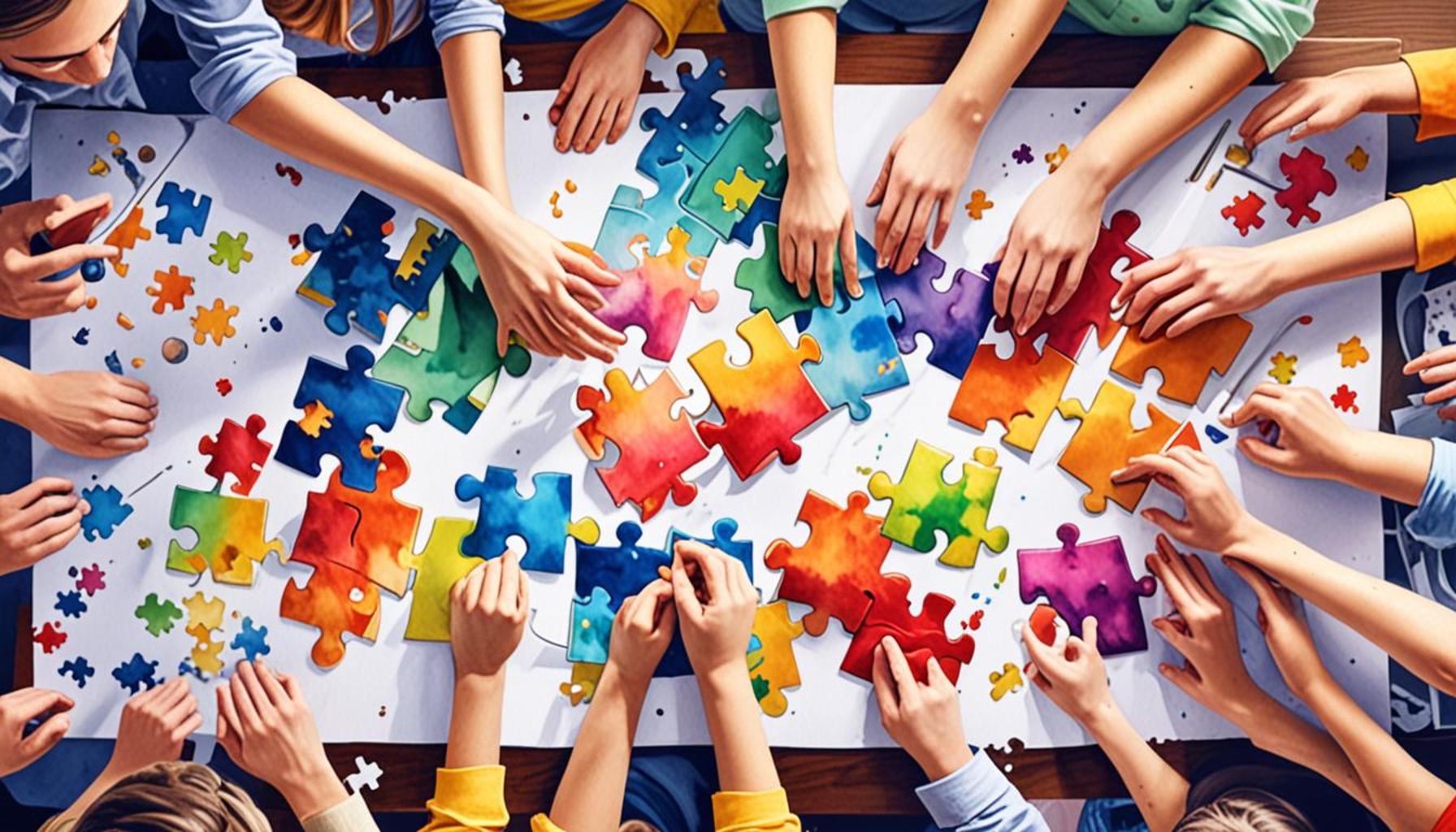
One of the simplest yet most effective collaborative puzzles is the traditional jigsaw puzzle. When teams tackle jigsaw puzzles together, they must coordinate their efforts, sharing individual pieces of information and insights as they work towards the final picture. Participants learn to articulate their thoughts clearly, especially regarding the placement of pieces and the overall vision of the completed image. The visual and tactile nature of jigsaw puzzles also encourages non-verbal communication, as team members can often perceive and understand cues from one another.
- Diverse Perspectives: Each team member approaches the puzzle with a different viewpoint, enhancing creative problem-solving. This diversity encourages collaboration that leads to discussions and ultimately a richer understanding of the task.
- Conflict Resolution: Disagreements may arise regarding piece placements; however, navigating these conflicts encourages healthy discussions and compromises, strengthening team trust.
Escape Rooms: High-Stakes Team Building
Escape rooms have gained popularity in corporate settings for their immersive and high-pressure environments. Teams are required to solve a series of complex puzzles within a specific time frame to “escape” the room, placing them in a scenario that mimics real-world deadlines and stressors.
- Time Management: The ticking clock creates urgency, encouraging team members to communicate quickly and efficiently. Each member must express their ideas without hesitation, which fosters an atmosphere where active listening is paramount.
- Dynamic Roles: Within the pressures of escape rooms, individuals often naturally gravitate toward different roles—those who excel at strategizing, organizing, or implementing solutions. This helps teams identify strengths and assign roles during future projects.
Digital Collaborative Puzzles: Innovation Meets Teamwork
With advancements in technology, digital collaborative puzzles such as online brain games and virtual reality experiences have emerged, enabling remote teams to engage in teamwork regardless of their physical locations. These puzzles require the same levels of communication and cooperation, often presenting a unique challenge as team members navigate through virtual platforms.
- Global Collaboration: Digital puzzles can bring together team members from across the globe, showcasing the importance of cross-cultural communication. This experience helps in building relationships that transcend geographical boundaries.
- Flexibility and Adaptability: Teams must adapt to new technologies and platforms as they solve challenges, enhancing their skills in technology-infused communication.
By introducing various types of collaborative puzzles into the workplace, organizations can effectively engage employees while fostering a culture of teamwork and communication. The multitude of benefits derived from these interactions aids in building a resilient workforce that thrives on collaboration, setting the stage for improved performance and innovation.
DIVE DEEPER: Click here to learn more
Conclusion: The Value of Collaborative Puzzles in Team Development
In a world increasingly driven by collaboration and communication, collaborative puzzles have emerged as a unique and effective tool for enhancing teamwork skills. By engaging team members in activities such as traditional jigsaw puzzles, immersive escape rooms, and innovative digital challenges, organizations foster an environment where collaboration thrives. These engaging formats encourage teamwork while cultivating essential skills such as creative problem-solving, dynamic role recognition, and conflict resolution.
As we’ve explored, each type of puzzle brings its own set of challenges and learning opportunities. Jigsaw puzzles emphasize the importance of articulating ideas and leveraging diverse perspectives, while escape rooms push teams to work under pressure, promoting effective communication and urgent decision-making. Moreover, the rise of digital collaborative puzzles underscores the value of cross-cultural communication in today’s global workforce, showing teams how to connect and engage despite physical distances.
Ultimately, the integration of collaborative puzzles into team-building strategies not only enhances communication skills but also strengthens team cohesion. As organizations increasingly recognize the benefits of fostering a culture of cooperation, investing time in collaborative puzzle activities can lead to more resilient and innovative teams. Thus, embracing collaborative puzzles may just be the key to unlocking greater synergy and productivity in today’s fast-paced work environments. Teams that solve puzzles together, thrive together, paving the way for mutual growth and success.