
Boost Creativity How Mind Games Fuel Innovative Thinking
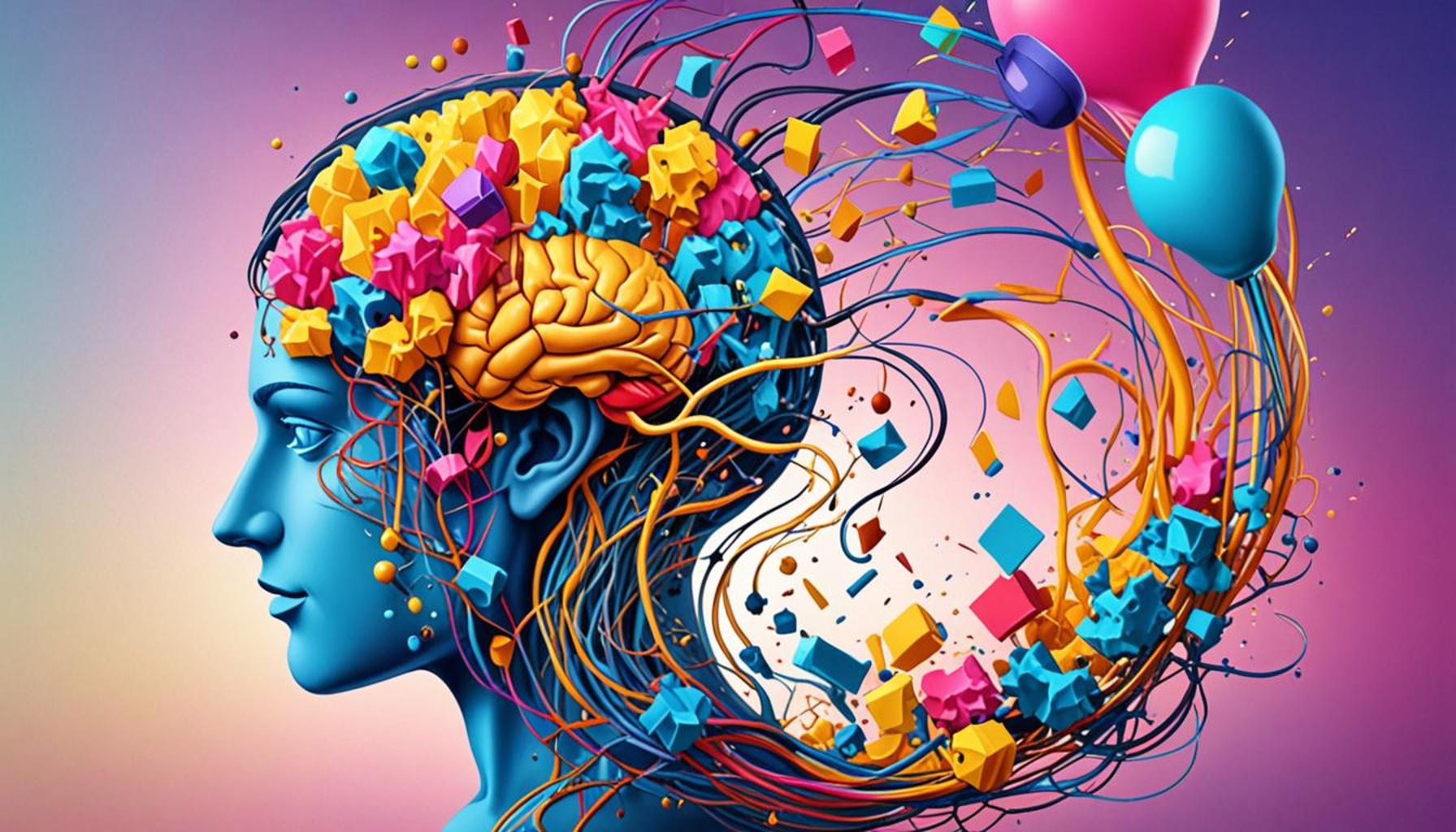
The Power of Mind Games: Unlocking Creativity
In today’s fast-paced world, where innovation drives success across industries, cultivating creativity has become an imperative skill. While creativity might seem like an innate talent, it is often the result of continually nurturing one’s mind through strategic stimulation. One fascinating approach to fostering this skill involves engaging in mind games and puzzles.
Beyond Entertainment: The Cognitive Benefits of Mind Games
Unlike mere entertainment, mind games serve a higher purpose by challenging our brains in unique ways. These activities stimulate cognitive functions, such as memory, attention, and reasoning, which are essential for developing groundbreaking ideas. This stimulation can lead to improved problem-solving abilities, encouraging individuals to think outside the box. When faced with puzzles that require novel solutions, players learn to adopt unconventional thinking, a trait crucial for innovation.
Research Insights: How Mind Games Foster Creative Thinking
Research has consistently shown that engaging in mental exercises has a positive impact on a person’s cognitive flexibility, which refers to the ability to adapt to new and unexpected challenges. For instance, strategic games like chess or complex puzzles can significantly enhance one’s ability to evaluate various outcomes and develop strategic solutions. By regularly participating in these activities, individuals not only sharpen their intellect but also develop a mindset that thrives on creativity and innovation.
Explore the Top 5 Mind Games for Innovators
To help you tap into your creative potential, we will explore the Top 5 mind games that not only entertain but also challenge your mind and spark fresh ideas. Whether you’re seeking inspiration for a project or simply want to break free from conventional thinking patterns, these games can lead to unique solutions in diverse fields:
- Sudoku: A number puzzle that enhances logical thinking and problem-solving skills.
- Crosswords: These promote vocabulary expansion and mental flexibility.
- Rubik’s Cube: Stimulates spatial recognition and dexterity in problem-solving.
- Chess: Encourages strategic thinking and foresight in unpredictable circumstances.
- Brain Teasers: Use these to boost reasoning and creativity with complex riddles.
Get ready to immerse yourself in a world where fun meets ingenuity, and
DISCOVER MORE: Click here to dive deeper
Top 5 Mind Games and Creativity: How Logical Challenges Stimulate Innovative Thinking
Exploring the intricacies of mind games and their capacity to trigger creativity reveals an intriguing interplay between logic and innovation. These challenges not only entertain but also foster critical thinking skills that are essential in today’s rapidly changing world. Here, we delve into the top five mind games that significantly enhance creativity and innovative thought processes.
5. Sudoku: A Puzzle of Numbers and Logic
Sudoku is more than just a number puzzle; it is a logical game that sharpens the mind’s analytical capabilities. Each grid presents a set of constraints that players must respect while filling in the numbers, requiring a methodical approach that fosters logical reasoning. While the game may seem straightforward, higher-level puzzles demand not just basic math skills but also advanced problem-solving strategies.
Sudoku, stemming from Japan, has conquered the globe as both a pastime and a brain-boosting activity. It challenges participants to fill a 9×9 grid so that every column, row, and section contains all numbers from 1 to 9. This deceptively simple set-up opens the door to complex problem-solving tasks. As players engage with more intricate arrangements, they often find themselves developing improved cognitive mechanics.
Moreover, research has shown that engaging in Sudoku can lead to an increase in cognitive flexibility—an essential component of creativity. By training the brain to think quickly and adaptively, Sudoku players often find themselves better equipped to approach complex problems from different angles.
Key Benefits of Playing Sudoku:
- Enhances logical reasoning abilities
- Promotes cognitive flexibility
- Improves attention to detail
Combining Logic with Creative Problem-Solving
While Sudoku predominantly exercises the logical left side of the brain, it’s the discovery of patterns and formulation of new strategies that engage the creative right side as well. Players become adept at recognizing when typical methods won’t suffice and develop innovative tactics, akin to lateral thinking, to address particularly challenging puzzles.
4. Escape Rooms: The Ultimate Team Challenge
Escape rooms have surged in popularity as immersive team-building activities that emphasize critical thinking and cooperation. These meticulously designed environments challenge players to unravel puzzles and clues under time constraints, promoting quick thinking and collaborative problem-solving.
Escape rooms offer a dynamic interface for innovation, thrusting participants into immersive narratives where every clue can alter the course. These scenarios demand not just raw intellect but the ability to quickly synthesize diverse pieces of information in a high-pressure environment. As participants work against the clock, they quickly learn the importance of every team member’s perspective and the synergy that arises from collaboration.
Research indicates that engaging in escape room challenges fosters creativity by encouraging participants to think outside the box and combine different ideas and strategies to reach a common goal. Working together with a diverse group provides unique perspectives that enhance innovative thought—making escape rooms a fertile ground for sparking creativity.
Advantages of Escape Rooms for Creative Development:
- Encourages teamwork and collaboration
- Fosters out-of-the-box thinking
- Enhances time management skills
Harnessing the Team’s Collective Brainpower
The teamwork required in escape rooms simulates real-world scenarios where innovation relies heavily on pooling collective insights. The diversity of thought and sharing of knowledge, inside the dimly lit and puzzling confines of an escape room, often leads to eureka moments that would be impossible to achieve individually.
3. Chess: The Game of Kings and Creative Strategy
Chess is a classic mind game that has long been regarded as a tool for developing strategic thinking and creativity. This game requires players to foresee potential moves and counters, demanding an adeptness in anticipating opponents’ strategies. Such foresight exercises cognitive muscles that are vital for creative problem-solving.
The rich history of chess, spanning over a thousand years, speaks to its efficacy at fostering acute strategic prowess. Encompassing an expansive set of possibilities beginning with the very first move, chess transcends mere competition. It becomes a battle of wits, where every decision ripples across the board with significant consequences. The necessity of planning several moves ahead cultivates not only tactical skills but a deep reservoir of creativity, as players concoct novel strategies that are unpredictable yet effective.
Studies indicate a correlation between chess playing and improved cognitive capabilities, such as memory, concentration, and enhanced problem-solving skills. As players navigate intricate scenarios on a chessboard, they develop the ability to see connections and draw from diverse experiences to create innovative solutions.
Benefits of Chess in Creative Thought:
- Improves strategic thinking
- Enhances cognitive abilities
- Encourages innovative problem-solving skills
The Art of War on a Wooden Board
Chess is often likened to a form of art due to its expressive potential in crafting complex strategies. Its requirement for the player to balance immediate engagement and long-term planning provides fertile ground for developing a nuanced understanding of creative dynamics. Indeed, it is not uncommon for chess players to apply these refined strategies to broader life challenges.
2. Brain Teasers: Short Challenges, Big Impacts
Brain teasers come in various forms, including riddles, lateral thinking puzzles, and visual challenges. These quick yet demanding puzzles captivate individuals, compelling them to exercise their mental faculties in creative ways. The ability to think laterally, to view problems from different perspectives, can significantly enhance one’s innovative thinking capacity.
Unlike more protracted and structured games, brain teasers offer the advantage of immediate engagement and reflection. They distill complex thought processes into manageable chunks that can easily slip into everyday downtime. From the classic “Sphinx’s Riddle” to modern visual conundrums scattered throughout social media, brain teasers enliven thought patterns, making them more nuanced and flexible.
Moreover, tackling brain teasers can serve as an enjoyable way to break the monotony, allowing individuals to refresh their perspective and approach problems from new angles. This shift in thinking often leads to innovative ideas in unrelated fields as well.
Advantages of Engaging with Brain Teasers:
- Boosts creative thinking
- Enhances problem-solving techniques
- Stimulates cognitive flexibility
The Intersection of Playfulness and Insight
Brain teasers are proof that sometimes the most profound insights emerge from a playful intertwine of logic and humor. Their pithy nature allows for quick experimentation with concepts that could take significantly longer in different contexts.
1. Puzzles and Strategy Games: The Realm of Creativity
Standing at the pinnacle of mind games, strategic puzzles like Rubik’s Cube, logic grid puzzles, and other abstract problem-solving challenges revolutionize how we approach creativity. These games do much more than entertain; they profoundly influence cognitive development and innovative thinking.
Rubik’s Cube, with its multicolored squares, has enchanted generations and continues to be a formidable exercise in planning and spatial awareness. By encouraging the mind to construct and deconstruct various pathways to solve the puzzle, it strikes a harmonious balance between creativity and precision. Likewise, logic grids and other strategic puzzles require synthesizing clues and logic to produce coherent solutions out of sprawling data sets.
Engaging with strategic puzzles enables players to construct and deconstruct challenges, fostering an environment ripe for creativity. By allowing the brain to process information in varied ways, these games enhance the ability to synthesize disparate elements into novel solutions, making them invaluable for innovation.
Benefits of Playing Strategy Puzzles:
- Sharpens analytical skills
- Encourages comprehensive thinking
- Builds persistence in problem-solving
The Architecture of the Mind
Puzzles invoke the metaphor of mental architecture—laying out elaborate cognitive blueprints and refining them until they are both functional and elegant. This ongoing process nurtures a profound understanding of balance between systematic structure and the ingenious leaps required to innovate effectively.
In conclusion, mind games serve as powerful tools for developing creativity and logical reasoning. Each game, in its unique way, refines cognitive processes that are instrumental in facing contemporary challenges. In a world that thrives on innovation, frequently engaging with these cerebral challenges could be the key to unlocking one’s creative potential.
| Category | Description |
|---|---|
| Cognitive Development | Engaging with mental games enhances problem-solving skills and boosts analytical thinking through pattern recognition and logical reasoning. |
| Creative Thinking | Challenging puzzles stimulate out-of-the-box thinking, encouraging individuals to consider unconventional solutions. |
| Emotional Resilience | Facing and solving complex problems fosters patience and perseverance, essential traits for overcoming challenges in various life aspects. |
| Social Interaction | Playing mental games in groups can improve communication skills and foster teamwork, as collaboration is often necessary to solve intricate challenges. |
Exploring the world of mental games reveals a treasure trove of advantages that can influence multiple facets of life and thought. One of the crucial categories is **cognitive development**. Engaging with mental puzzles not only enhances problem-solving abilities but also fortifies analytical thinking through diverse patterns. Players often find themselves reconstructing complex scenarios and examining relationships among various elements—an exercise that fundamentally sharpens their intellect.In addition to cognitive enhancement, there is a significant tie between mental challenges and **creative thinking**. These games push individuals to employ their imagination actively, inviting them to approach problems from various angles. For instance, when faced with unconventional puzzles, players might discover that their usual thought processes lead to dead ends, thereby motivating them to seek innovative, untested solutions. Such shifts in perspective are vital in nurturing creativity, a skill highly sought after in today’s dynamic environment.Furthermore, mental challenges also contribute to the building of **emotional resilience**. The need to tackle complex problems often requires an immense amount of patience and perseverance. As individuals engage with these challenges, they learn to cope with frustration and to manage their emotions effectively. These traits become invaluable not just in gaming, but also in navigating real-life difficulties where similar qualities can determine success.Finally, the realm of mental games enhances **social interaction**. When people collaborate to solve puzzles, they engage in a form of communication that bridges gaps and fosters relationships. The necessity for teamwork in many of these games encourages players to articulate their thoughts clearly and to listen actively, which is essential for effective collaboration. Ultimately, mental challenges serve as a catalyst, nurturing both individual talents and collective dynamics that are vital in today’s interconnected world.
DISCOVER MORE: Click here to enhance your skills with fun puzzles
Frequently Asked Questions about Mental Games and Creativity
How do mental games contribute to enhancing creativity?
Mental games, such as puzzles and riddles, challenge the brain to think outside the box and approach problems from different perspectives. This process helps to break habitual thinking patterns and can lead to innovative ideas. Studies show that engaging with such cognitive challenges activates neural pathways, fostering a more versatile thinking style. The element of surprise and novelty in mental games can also stimulate the release of dopamine, which is linked to motivation and problem-solving skills.
Are there specific types of mental games that are more effective in stimulating creative thinking?
While a variety of mental games can foster creativity, certain types have been shown to be particularly effective. For instance, brain teasers and lateral thinking puzzles encourage players to make unconventional connections, whereas strategy games require planning and foresight. Additionally, many experts highlight the benefits of improvisational games, which demand quick thinking and adaptability, essential elements in creative processes.
Can mental games replace traditional creative exercises, such as brainstorming?
Mental games can complement traditional creative exercises but are not typically a replacement. While games enhance various cognitive skills necessary for creativity, techniques like brainstorming rely on collaborative dynamics and divergent thinking, which might not be fully replicated through individual gaming experiences. However, when used together, mental games can enhance the brainstorming process by preparing the mind to think more flexibly and innovatively.
How frequently should one engage in mental games to see a substantial impact on creativity?
The impact of mental games on creativity can vary depending on the individual’s engagement level and cognitive baseline. However, regular practice is generally recommended. For instance, dedicating 15 to 30 minutes daily to mental games can maintain brain agility and progressively enhance creative skills over time. It is crucial to choose games that gradually increase in complexity, thus continuously challenging the brain.
Is there scientific evidence supporting the link between mental games and increased creativity?
Yes, there is scientific evidence suggesting a link between mental games and enhanced creativity. Research in cognitive science indicates that activities involving problem-solving and critical thinking lead to increased neuroplasticity, which is the brain’s ability to form new connections. This adaptability is crucial for creativity. Furthermore, it has been observed that individuals who regularly engage in challenging puzzles and games tend to outperform others in tasks requiring innovative solutions.
DISCOVER MORE: Click here to learn effective strategies
Conclusion
As we explored the intricate relationship between mind games and creativity, several key insights emerged, shedding light on how logical challenges can spark innovative thinking. Mind games, ranging from puzzles to complex brainteasers, serve as more than mere entertainment; they are catalysts for cognitive growth and creative exploration. By engaging with these challenges, individuals enhance their problem-solving abilities, cultivate patience, and develop a keen eye for detail.
The article revealed that mind games play a crucial role in stimulating neural pathways that foster inventive and original ideas. Such mental exercises encourage individuals to think outside the box, challenging conventional thought patterns and leading to new and unique solutions. Additionally, logical challenges have been shown to improve memory, concentration, and mental agility—all essential components for nurturing creativity.
Moreover, the role of perseverance and resilience cannot be underestimated. As individuals confront and overcome complex puzzles, they learn to embrace failure as a step towards success, thereby cultivating a growth mindset that is essential for creativity. This ability to adapt and learn from mistakes is instrumental in transferring the problem-solving skills gained from mind games to real-world situations.
In conclusion, the vital connection between mind games and creativity highlights an opportunity for individuals to harness logical challenges as tools for innovative thinking. By doing so, they not only enrich their cognitive abilities but also enhance their capacity to generate novel ideas. As the landscape of knowledge and innovation continues to evolve, the importance of fostering creativity through mind games becomes increasingly apparent. For those eager to dive deeper, exploring diverse puzzles and challenges may offer a path to unlocking untapped creative potential.