
Exploring Virtual Reality Puzzles: A New Frontier in Cognitive Skill Development

Transforming Learning Experiences
Virtual reality (VR) is not only revolutionizing the realm of entertainment but is also paving the way for groundbreaking changes in educational methodologies. As the technology matures, its immersive nature is revealing limitless possibilities for enhancing cognitive skills beyond the traditional classroom setup.
In this digital age, engagement is pivotal to effective learning. One of the hallmarks of VR is its ability to create enhanced engagement. For instance, VR puzzles can transport players into unique worlds filled with challenges that require keen observation and strategic thinking. Such immersive experiences naturally captivate users, leading to deeper involvement and focus on problem-solving tasks. Unlike standard educational tools, VR creates an interactive platform that encourages exploration and experimentation.
Moreover, the diverse learning opportunities provided by VR puzzles are noteworthy. These puzzles can address a wide scope of cognitive skills, including spatial awareness, critical thinking, and even emotional intelligence. For example, a user navigating a 3D environment must continuously assess their position in relation to obstacles, thereby honing their spatial awareness. Additionally, they might encounter clues requiring analytical skills, reinforcing their problem-solving abilities as they progress through challenges.
Another striking feature of VR education is its emphasis on personalization. Unlike conventional educational methods that adopt a one-size-fits-all approach, VR allows users to customize their experiences. This personalization not only makes the learning experience more enjoyable but also caters to individual learning curves. For instance, a learner might choose specific skill levels or themes, whether in mathematics, science, or art, allowing them to develop their cognitive skills uniquely.
Several VR puzzle games have gained popularity in the United States, further demonstrating the effectiveness of this innovative approach. Echo VR, for example, fosters teamwork and strategy development by requiring players to collaborate to achieve shared goals. On the other hand, Moss beautifully integrates compelling storytelling with intricate problem-solving tasks, captivating users of all ages. Lastly, The Room VR offers users a chance to unravel layers of intricate designs, challenging their spatial reasoning and encouraging critical analytical thought.
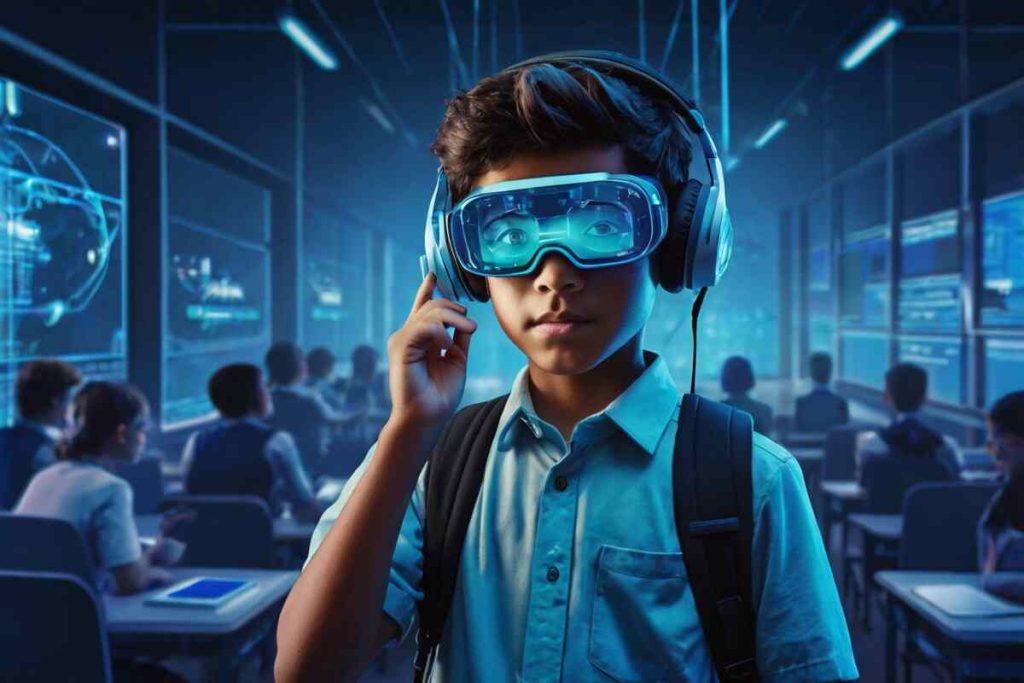
The advancement in VR technology is making these enriching tools more accessible. Educational institutions across the United States are increasingly integrating VR puzzles into their curriculums, fostering an enriched environment conducive to collaboration and innovation. As schools adopt these tools, they prepare students to thrive in a rapidly evolving digital landscape, equipping them with essential skills for future challenges.
In exploring the realm of virtual reality puzzles, we uncover their significant potential in transforming cognitive skill development. As we engage with this technology, the question remains: how will VR shape the future of education, and what new avenues for growth and learning will emerge? Join us as we navigate this intriguing journey into the transformative power of VR and its profound implications for learning and growth.
DIVE DEEPER: Click here to learn more
Unleashing Cognitive Potential through VR Puzzles
The world of virtual reality puzzles offers a fascinating glimpse into a future where engaging in problem-solving is not only enjoyable but also incredibly beneficial for cognitive skills development. This interactive landscape is transforming how learners of all ages approach challenges, making the cognitive development process not only effective but also fun. By immersing individuals in intricate virtual environments, these puzzles facilitate a unique learning experience that was previously unimaginable.
Engagement remains a central theme in the effectiveness of VR puzzles. Traditional learning often relies heavily on passive absorption of information, leading to a lack of critical engagement. In stark contrast, VR puzzles demand an active role from the participant, who must think critically to navigate issues in real-time. For instance, users may need to unlock doors, decipher codes, or even manipulate objects using intuitive gestures. This active participation promotes a deeper cognitive investment and enhances retention of knowledge—an essential pillar of effective learning.
Moreover, the structure of VR puzzles is designed to mirror real-life scenarios, which enhances their relevance and applicability. This realism promotes skills that are crucial in both academic and professional settings. As players work through complex problems, they inadvertently practice skills such as:
- Problem-solving: Tackling varied challenges fosters resilience and innovative thinking.
- Spatial reasoning: Engaging with 3D puzzles enhances one’s ability to visualize and manipulate objects in space.
- Collaboration: Many VR puzzles require teamwork, teaching participants to communicate effectively and work towards a common goal.
- Decision-making: Players often need to make quick decisions that can significantly alter the game’s outcome, fostering critical thinking skills.
Another compelling feature of VR puzzles is the instant feedback they provide. Unlike traditional testing methods, which may leave students guessing about their understanding of a topic, VR typically generates immediate responses to users’ actions. This feedback loop allows for continuous learning and adjustment, ensuring that participants can identify areas needing improvement right away. As learners adapt to challenges, they experience a sense of accomplishment, significantly enhancing their motivation to continue developing their skills.
It’s also important to consider accessibility— a factor that has been crucial in the advancement of VR technologies. Schools, particularly in the United States, are beginning to adopt VR systems that facilitate the implementation of educational puzzles into their curricula. This integration is not only fostering a cooperative learning environment but also broadening the availability of cognitive skill development resources. Educational institutions are now tasked with the responsibility of preparing students for future challenges in a digitally-driven world, and VR puzzles stand at the forefront of this innovative shift.
As society increasingly embraces this digital transformation, the potential for VR puzzles to unlock cognitive abilities in learners is just beginning to be realized. With ongoing innovations and the growing acceptance of VR in educational settings, a curious exploration into the vast potentials of virtual reality puzzles marks an exciting chapter in cognitive skill enhancement—one that demands our unified attention and investigative spirit.
| Category | Benefits |
|---|---|
| Engagement | Virtual reality puzzles create an immersive environment, enhancing user involvement and making problem-solving more engaging. |
| Cognitive Development | These puzzles challenge various cognitive skills, such as critical thinking, pattern recognition, and spatial reasoning, promoting overall mental agility. |
The implementation of virtual reality puzzles represents a cutting-edge approach to cognitive skill enhancement. As users navigate through interactive environments, they encounter challenges that demand strategic thought and adaptability. This innovative format enables individuals to experience a level of immersion that traditional learning methods simply cannot match.Furthermore, the ability to manipulate 3D objects within a virtual space facilitates the development of skills that are vital in both academic and real-world scenarios. For instance, users learn to approach problems creatively, evaluating different strategies to achieve success. As technology continues to evolve, the application of VR puzzles in educational contexts promises to revolutionize cognitive development, offering tailored experiences that adapt to individual learning styles. Curiosity piqued? The world of virtual reality puzzle-solving awaits, inviting learners to expand their mental horizons.
DISCOVER MORE: Click here to enhance your relaxation techniques!
The Role of Inclusivity and Diverse Learning Experiences in VR Puzzles
As we delve deeper into the realm of virtual reality puzzles, a critical aspect that emerges is the emphasis on inclusivity. Traditional learning environments can often overlook diverse learning needs. However, VR technology is inherently capable of customizing experiences for individuals, making learning more accessible for everyone, including those with disabilities. Tailored VR puzzles can accommodate various types of learners, allowing students with different cognitive needs to engage in problem-solving activities without the barriers commonly found in standard educational frameworks.
The diversity of VR puzzle designs means that educators can curate experiences that resonate with their students’ interests and cultural backgrounds. By reflecting real-world scenarios, VR puzzles can help bridge the gap between theoretical knowledge and practical application, enabling learners to see the value of their skills in various contexts. For instance, a VR puzzle based on environmental conservation can inspire students to actively think about sustainability, helping them connect their cognitive development with real-world issues. This contextual learning enriches the educational experience and highlights how cognitive skills can be applied to pressing global challenges.
Moreover, the immersive nature of virtual reality acts as a powerful motivator for learners. According to studies, engagement levels in virtual environments significantly surpass those observed in conventional educational settings. For example, a 2021 survey found that students using VR for problem-solving scored higher in engagement and retention than their peers using traditional methods. Such results underscore the importance of motivation and curiosity in optimizing cognitive skill development.
The exploration of VR puzzles is not just a solo venture; collaborative puzzles are emerging as an essential tool for group learning. Virtual reality creates online platforms where participants can solve problems together, regardless of geographic limitations. This collaboration promotes communication, patience, and understanding among teammates, elements that are critical in both personal and professional settings. As a result, students not only hone their cognitive skills but also develop interpersonal skills necessary for the modern workplace. This synergy of cognitive and social skill development is particularly relevant in the United States, where teamwork is often a key requirement in both education and employment sectors.
As the landscape of cognitive skill development evolves, we must also recognize the impact of gamification in VR puzzles. By incorporating game mechanics such as rewards, levels, and achievements, VR puzzles engage learners in a manner akin to playing a video game. This gamified approach significantly enhances the learning experience, as players are more likely to experiment, take risks, and persist in overcoming challenges. Educational institutions that embrace gamification in conjunction with VR puzzles are effectively creating a motivating learning atmosphere, where students feel empowered to explore and innovate.
Furthermore, as advancements in VR technology continue to unfold, the potential for real-time analytics in educational VR puzzles is becoming increasingly apparent. This analytics capability could provide educators with valuable insights into students’ problem-solving strategies and learning processes, allowing for timely interventions and tailored teaching methods. By harnessing data-driven insights, educators can foster an adaptive learning environment as unique as the students themselves, ensuring that cognitive development is maximized.
The intersection of gamification, inclusivity, and advanced analytics in virtual reality puzzles presents an incredible opportunity to reshape cognitive skill development. As we stand on the brink of this new frontier, further exploration into these dynamic elements will undoubtedly unveil profound implications for the future of education and learning outcomes. This paradigm shift encourages not only academic achievement but also holistic growth, equipping learners with the essential skills needed in an ever-evolving world.
DISCOVER MORE: Click here to dive deeper
Conclusion: Embracing the Future of Learning through VR Puzzles
In conclusion, virtual reality puzzles stand at the cutting edge of cognitive skill development, offering innovative solutions that cater to diverse learning styles and needs. By integrating immersive experiences with tailored learning paths, VR technology transcends traditional educational barriers, enabling students to engage in critical thinking and problem-solving like never before. The emphasis on inclusivity ensures that learners of all backgrounds and abilities can participate, making education accessible for everyone.
The collaborative nature of VR puzzles facilitates teamwork and communication, essential skills in today’s interconnected world. As students navigate challenges together in virtual environments, they not only refine their cognitive abilities but also gain valuable interpersonal skills that prepare them for future workplace demands. Additionally, the incorporation of gamification introduces an engaging element to learning, transforming education from a solitary task into an exciting adventure that fosters persistent curiosity and a thirst for knowledge.
Furthermore, as real-time analytics become more prevalent in the VR landscape, educators are poised to leverage data-driven insights to personalize learning experiences more effectively. This capability promises to transform teaching methodologies and enable tailored interventions that nurture each student’s unique learning journey.
As we continue to explore this new frontier, the implications of virtual reality puzzles will undoubtedly reverberate through the educational landscape. By fully embracing these advancements, we can redefine not only how we teach but also how we inspire future generations to tackle the challenges of an ever-evolving world with confidence and creativity.