
How Storytelling Elements in Puzzles Can Aid Memory Recall
Unraveling Memory Through Engaging Narratives
Storytelling is an ancient art form that captivates audiences and weaves details into memorable experiences. When integrated into puzzles, these narratives can transform simple tasks into engaging journeys, significantly enhancing memory recall. But how do these intricate elements work together to create a rich tapestry that boosts cognitive function?
- Character Development: Puzzles featuring relatable characters can facilitate emotional connections. For instance, a puzzle might revolve around a quirky detective named Elara who must solve a mystery. Players who invest emotionally in Elara’s journey are more likely to recall the puzzle’s clues and strategies. This emotional engagement creates a powerful bond, enabling memories tied to the character to stick.
- Plot Twists: Unexpected developments keep the brain engaged, making recall more efficient. Imagine a scenario where just as the player makes a breakthrough, a twist occurs — perhaps a trustworthy ally turns out to have their own secret agenda. Such plot twists not only heighten suspense but also stimulate the brain by requiring it to adapt its understanding, which solidifies memory pathways.
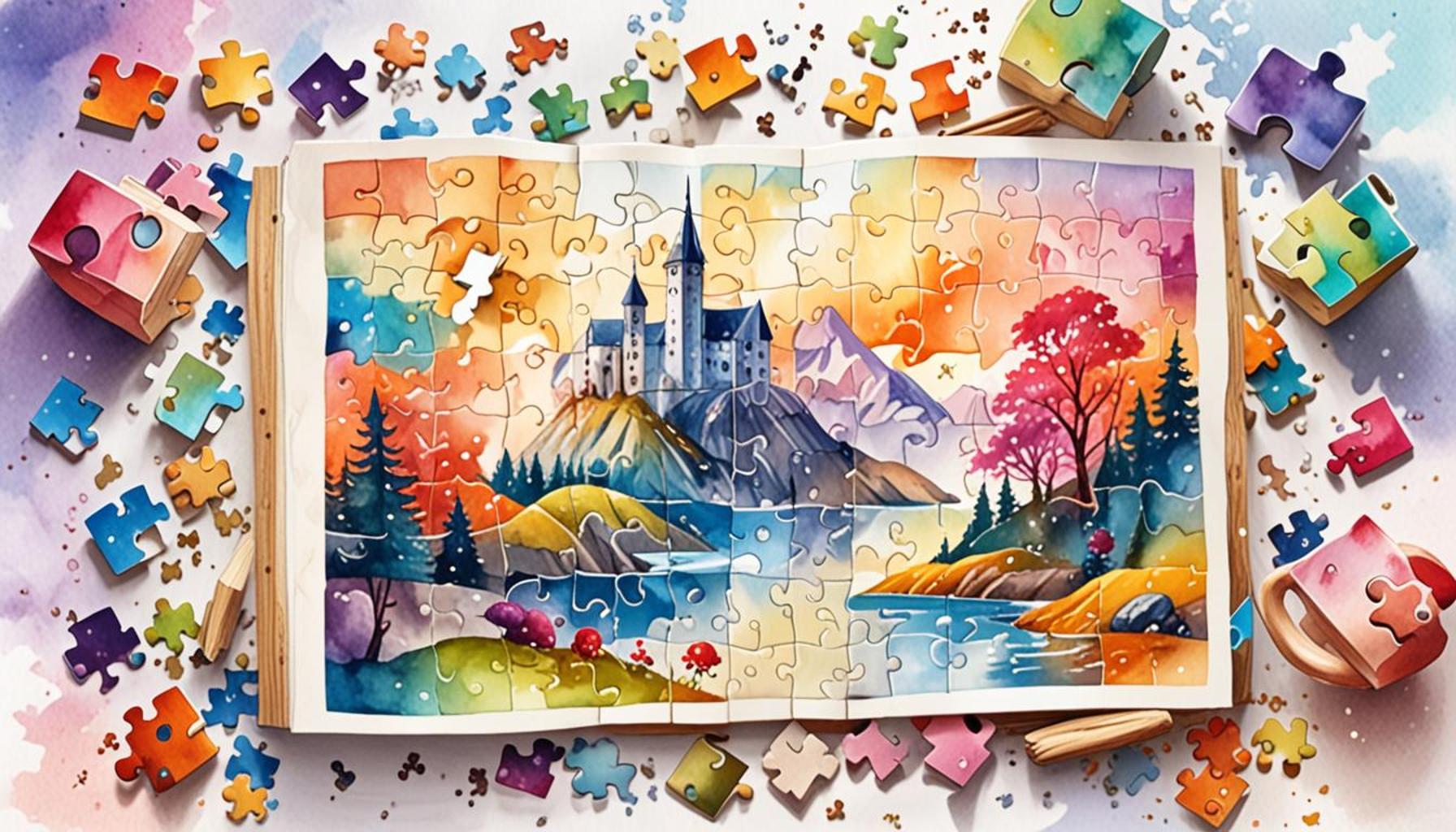
- Setting: Vivid backdrops provide context, reinforcing the memory of the puzzle’s challenge. For example, if the puzzle is set in a vibrantly illustrated ancient castle, the aesthetics of the environment create a mental image that players can easily recall. This sensory input, combined with the narrative, enhances the ability to remember specific details about the puzzle elements.
Research indicates that the brain tends to retain information, especially when presented in narrative form. A study published by the journal Cognitive Psychology found that information relayed through stories is 22 times more memorable than when presented in a list format. Incorporating storytelling elements not only enriches the puzzle experience but also offers a unique way to foster cognitive functions and improve memory skills.
As you immerse yourself in these narrative-driven puzzles, consider how each interaction helps scaffold memory retention. In this space, you’ll discover that you don’t just enjoy entertainment; you actively engage a tool for improving cognitive abilities. Narrative-driven puzzles become a dual-purpose activity — they entertain while enhancing memory fortitude.
Explore the Connection
Dive deeper into how these storytelling strategies can elevate your memory skills. By understanding the synergy between narrative and puzzle-solving, you can unlock new dimensions of recall ability. Whether you are piecing together a murder mystery or navigating an enchanted forest, each story not only challenges your intellect but also fortifies your memory. Engaging with puzzles in this way may lead you to newfound strategies for learning, problem-solving, and even daily life challenges.
DISCOVER MORE: Click here to learn about the benefits of logic games

The Mechanics of Memory and Narrative
Memory is a complex yet fascinating phenomenon, influenced by various factors, including context and emotional engagement. When it comes to puzzles, integrating storytelling elements serves as a significant catalyst for enhancing memory recall. Through stimulating the brain’s emotional centers while providing a structured narrative, puzzles can effectively reinforce the retention of information. Understanding how these components interlace can provide valuable insights into improving your cognitive abilities.
First and foremost, character-driven narratives play a vital role in facilitating memory recall. When players encounter a puzzle that features a protagonist, they are more likely to forge a connection with that character. This emotional bond acts as an anchor for the information they encounter throughout the gameplay. Studies indicate that personal experiences intertwined with characters can amplify memory retention. In contrast to traditional puzzles that offer no narrative context, those featuring characters like a cunning pirate or a brave knight allow players to align their personal beliefs and values with the unfolding story, further enhancing recall.
- Engagement Techniques: Unique character traits or backstories invite players into the narrative world. For instance, a puzzle about a detective facing various challenges can prompt players to become emotionally invested. This investment creates a safety net for information embedded in the narrative, making it more retrievable later on.
- Story Arcs: The progression of the story provides a framework that is easy to follow, facilitating the learning process. Each stage of the puzzle not only brings with it a new challenge but also offers hints and clues that correlate with the plot, further solidifying memory connections.
- Motivational Factors: Solving puzzles with a narrative element can spur curiosity and motivation. Players are more inclined to pursue solutions when they are energizing the story’s advancement, which allows for deeper cognitive engagement. The more operated the brain is, the more effectively it retains information.
Another key storytelling technique involves the use of plot developments. As characters face conflicts or unexpected twists, players are encouraged to think critically and adapt their strategies. The act of navigating these surprises not only deepens player engagement but also creates distinct memory markers associated with the puzzle elements. Each unexpected turn engages the memory centers of the brain, making the associated information easier to retrieve later. Furthermore, emotional responses triggered by plot twists—such as shock or excitement—can significantly enhance memory consolidation through the release of neurotransmitters related to reward and motivation.
As you delve into storytelling elements in puzzles, acknowledge how they transform mere challenges into complex cognitive exercises. The synergy between narrative structure and puzzle-solving processes creates a fertile ground for memory cultivation. Not only do these puzzles entertain, but they also serve as effective tools for developing robust recall capabilities.
As we delve deeper into the essential connection between storytelling elements and memory recall in puzzles, it becomes clear how integrating narratives enhances cognitive engagement. When puzzles incorporate relatable characters or a compelling storyline, they not only capture the interest of players but also promote deeper emotional connections, making the information more memorable. This narrative-driven approach can elevate the challenge of a puzzle from mere problem-solving to an immersive experience, encouraging individuals to engage their imaginations and emotions.
Furthermore, the use of visual storytelling in puzzles has proven to be a powerful mnemonic device. Puzzles that feature striking imagery or thematic elements guide players through their thought processes, allowing them to visualize outcomes and relate clues to relevant narratives. This not only aids in observation but also in recalling specifics—each color, character, and setting contributes to a memory tapestry woven by personal interpretation.
Adding to this, the concept of progressive storytelling enhances the problem-solving process by introducing sequential challenges that build on previous knowledge. Each completed section of a puzzle reveals further clues or narrative elements, fostering a sense of accomplishment that reinforces memory. Players are not simply putting pieces together; they are assembling a story, thus improving recollection through context. This approach allows for an innovative pathway to learning, making it easier to retain new information by embedding it within a larger narrative framework.
Incorporating these storytelling elements into puzzle design not only entertains but can transform the way we approach learning and memory retention. As research continues to highlight the psychological benefits of such techniques, the question of how we can further harness storytelling to develop memory aids remains a fascinating avenue for exploration.
| Category 1 | Category 2 |
|---|---|
| Enhanced Recall | Story-driven puzzles promote emotional engagement, aiding memory retention. |
| Visual Context | Images and themes help visualize and contextualize clues, reinforcing memory. |
As we continue to explore these intriguing facets of memory enhancement through storytelling in puzzles, it ignites curiosity about the potential applications in education, cognitive therapy, and leisure activities alike. Whether for developing problem-solving skills or simply enjoying a captivating narrative, puzzles designed with these elements have a significant role to play in today’s cognitive landscape.
DISCOVER MORE: Click here to unlock the benefits of puzzles for your mind!
Building Context Through Immersive Environments
The environment in which a puzzle unfolds can greatly enhance memory recall. By crafting a richly detailed setting that immerses players in the narrative, puzzle designers can utilize the principles of environmental context to anchor memories. Just as a vividly described location in a book transports readers into a different world, a well-developed puzzle environment encourages players to engage their senses and form stronger memories associated with the tasks at hand.
One effective way to achieve this is through sensory storytelling. Puzzles can condition players to connect visuals, sounds, and tactile feedback with specific narrative elements. For example, a puzzle set in an enchanted forest may incorporate sounds of rustling leaves and chirping birds, while colorful visuals portray the vibrancy of magical creatures. These multisensory experiences can activate different areas of the brain associated with memory, creating a richly woven tapestry that enhances recall. Research has shown that when sensory details are linked with learning, the information is retained longer, underscoring the value of environmental context in puzzles.
- Associative Memory: Creating a vivid mental image of a puzzle’s setting can evoke associations that strengthen memory retrieval. Players might remember crucial clues by recalling specific elements of the environment they were navigating, such as a cryptic inscription carved into a stone wall or a flickering lantern illuminating their path.
- Spatial Memory: The layout of a puzzle often mimics the structure of a narrative journey, allowing players to mentally map their progress. This interplay between spatial navigation and storytelling fosters a deeper understanding of the material, as players visualize linear pathways within the narrative arc, facilitating memory recall.
- Emotionally Charged Spaces: Environments that trigger emotional responses tend to reinforce memory connections. A puzzle that tells a story of loss or triumph in a specific location engages players on a psychological level, ensuring that the information they uncover resonates more profoundly. Emotional connections expand the relevance of memory, making it easier to retrieve necessary details later.
Moreover, interactive choices in storytelling puzzles can significantly elevate the stakes and enhance player investment. When players are given the opportunity to make decisions that affect the narrative, they feel a greater sense of ownership over the outcome, which can strengthen memory encoding. Each choice they make within the puzzle allows them to connect their cognitive processes with narrative progression, which forms stronger memory links.
For instance, a player may need to choose paths that lead to different outcomes in a puzzle set in a dystopian future. Each decision could be associated with specific information that requires recall, thereby ensuring that players engage with the narrative actively—making the story resonate on a personal level that aids in recollection. The interplay of choice and consequence reinforces the significance of the narrative, foregrounding information within memorable experiences.
As we explore these storytelling elements, it becomes evident that the fusion of narrative techniques with traditional puzzle mechanics can create a formidable strategy for improving memory recall. By inviting players into immersive worlds that appeal to their senses and emotions, puzzle creators have the unique opportunity to develop cognitive engagement that resonates long after the game is over.
DIVE DEEPER: Click here to discover more
Conclusion: The Future of Memory Recall Through Storytelling in Puzzles
In summary, the incorporation of storytelling elements within puzzles represents a transformative approach to enhancing memory recall. By leveraging immersive environments and the rich tapestry of sensory storytelling, puzzle designers can significantly boost players’ capacity to retain and retrieve information. As we’ve seen, employing elements such as associative memory, spatial navigation, and emotional engagement within a narrative context not only enriches the gaming experience but also engages cognitive processes that are crucial for effective learning.
With the ongoing evolution of digital platforms, the integration of interactive choices within puzzles is particularly promising. As players navigate branching narratives, their sense of agency enhances both their emotional investment and the overall memorability of the storyline. This model not only aids memory recall but also fosters a deeper connection to the material, making the learning process both enjoyable and impactful.
Ultimately, as researchers continue to uncover additional links between storytelling and cognitive function, puzzle creators hold the potential to redefine educational tools. By ensuring that puzzles are not merely tasks to be solved but are also rich narratives waiting to be explored, we can unlock new possibilities for memory enhancement. As we move forward, embracing these innovations in puzzle design can lead to more effective ways of retaining knowledge, enriching both gaming and learning experiences across diverse audiences.