
How Sudoku Challenges Can Enhance Logical Thinking and Concentration

Exploring the Cognitive Advantages of Sudoku
Sudoku engages our brains in a delightful and challenging manner, serving beyond mere entertainment. As players fill in the 9×9 grid, they actively participate in a brain workout that enhances several cognitive abilities. This entertaining mathematical puzzle sharpens logical thinking while also significantly boosting concentration levels.
Engaging with Sudoku offers a multitude of cognitive benefits that can enhance daily life. Here are some key advantages:
- Enhanced Problem Solving: Each Sudoku puzzle is a unique challenge that requires players to devise strategies. As they navigate through numbers and patterns, they learn to think critically about possible solutions. For example, while solving a particularly tricky puzzle, a player might need to experiment with various combinations before pinpointing the correct digit placements.
- Improved Memory: The act of remembering the rules as well as recognizing patterns as one progresses through the puzzle helps strengthen cognitive function. Regularly practicing Sudoku encourages the brain to recall past games and strategies that worked well, reinforcing memory retention.
- Heightened Focus: Successfully completing a Sudoku challenge demands a high level of concentration. Distractions can lead to mistakes, making it crucial for players to hone their ability to focus. Many individuals report feeling a sense of flow when deeply immersed in a puzzle, reflecting a meditative state that is hard to find in today’s busy lifestyle.
Research underscores the long-term cognitive benefits of regularly engaging with Sudoku. Studies have shown a correlation between consistent puzzle-solving and improved mental agility over time, making it an ideal pastime not only for students but also for seniors aiming to maintain their cognitive skills. For instance, retirement communities in the United States often incorporate Sudoku as a group activity to encourage social interaction while also keeping minds active.
In our fast-paced society, finding enjoyable ways to enhance our logical reasoning skills is essential. Sudoku represents a reliable and entertaining option for those seeking to challenge themselves while cultivating growth. The appealing nature of these puzzles lies not just in their simplicity but also in their capacity to contribute to cognitive development across various age groups.
Are you intrigued by the power of Sudoku? Dive deeper into the world of these addictive puzzles and discover how they can profoundly enhance your cognitive abilities, offering both challenge and enjoyment.
DISCOVER MORE: Click here to learn how complex puzzles can enhance your decision-making skills
Unveiling the Mechanics of Logical Thinking
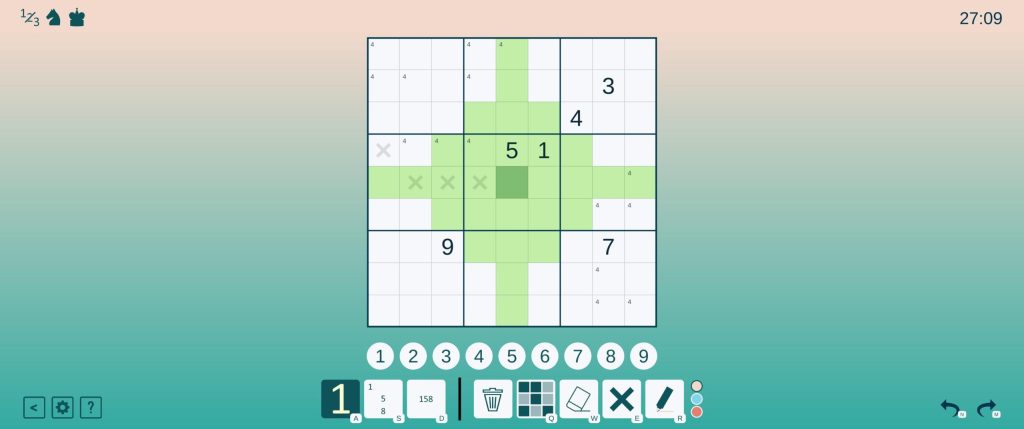
At its core, Sudoku is a game of logic and deduction. The primary objective is to fill a 9×9 grid with digits from 1 to 9 so that each row, column, and 3×3 subgrid contains all the numbers without repetition. This seemingly simple rule hides a complex web of possibilities that players must navigate, fostering logical thinking. As individuals engage with these puzzles, they encounter various techniques that enhance their ability to analyze situations critically.
One of the first skills developed through Sudoku is deductive reasoning. Players learn to eliminate possibilities, working methodically through the grid. For instance, if a player identifies that a particular number cannot fit in a certain spot, they can confidently mark that potential solution off their list. This process of elimination cultivates a structured approach to problem-solving, encouraging players to consider multiple variables before arriving at a conclusion.
The Role of Pattern Recognition
Another significant cognitive advantage derived from Sudoku is improved pattern recognition. As players continue to solve puzzles, they begin to recognize common configurations and number placements. This heightened awareness translates into sharper analytical skills applicable in everyday life, from strategic decision-making in professional settings to enhancing mathematical abilities for students. Research conducted on cognitive skills suggests that engaging in activities that promote pattern recognition, like Sudoku, can lead to better performance in areas requiring similar skills.
- Identifying Duplicates: Recognizing when a number is already present in a row, column, or subgrid is fundamental in Sudoku. This awareness helps train the brain to pay attention to details in tasks outside the game, such as work-related projects or academic pursuits.
- Understanding Relationships: Sudoku demands players not only to focus on individual numbers but also on how they relate to one another within the grid. This keen sense of relationships fosters a deeper understanding of logical sequences, which are crucial in various domains.
- Strategic Planning: Players must frequently reconsider their strategies based on the dynamic nature of the game. This adaptability builds resilience in logical thinking, equipping individuals with the ability to adjust plans in real-life situations when faced with unexpected challenges.
As players master these skills, they also experience an enhancement in their concentration levels. Sudoku requires sustained attention and minimizes the opportunity for distractions. In a world filled with technology and constant interruptions, carving out time for focused Sudoku practice can train the mind to concentrate more effectively. Many advocates of cognitive training posit that engaging in such puzzles can lead to improvements in overall productivity and mental clarity.
In conclusion, the seemingly simple act of filling in numbers on a grid transcends into a multifaceted exercise in improving logical thinking and concentration. As players become more adept at solving Sudoku puzzles, they build mental flexibility and an enhanced capacity for critical thinking that benefits them in both personal and professional realms. With so much to gain, the allure of Sudoku extends beyond mere recreation; it serves as a powerful tool for cognitive enhancement.
| Cognitive Benefits | Practical Applications |
|---|---|
| Enhanced Problem Solving | Sudoku challenges require players to employ various strategies to find solutions, cultivating a mindset geared towards effective problem resolution. |
| Increased Focus and Concentration | Engaging with Sudoku requires sustained attention, aiding individuals in developing improved concentration skills that can be applied to tasks in daily life. |
Sudoku puzzles demand a level of logical reasoning and concentration that can significantly benefit cognitive functionality. The act of solving these puzzles stimulates brain activity, enhancing neural connections that improve cognitive agility. Such benefits are particularly useful in academic and professional settings where problem-solving skills and concentration can lead to better performance.Moreover, as individuals continuously engage with Sudoku, they experience an increase in their ability to focus for extended periods. This is especially beneficial in today’s fast-paced environment, where distractions are plentiful. The skills garnered from regular Sudoku practice can translate into improved productivity and efficiency in various life scenarios. As more individuals are discovering the link between these challenges and cognitive enhancement, Sudoku continues to gain traction not merely as a pastime but as a powerful tool for mental sharper and improved focus.
DIVE DEEPER: Click here to discover the psychology behind puzzles
The Cognitive Benefits of Regular Engagement
Engaging with Sudoku puzzles regularly can lead to significant cognitive benefits that extend well beyond the confines of a 9×9 grid. Time spent on these puzzles can create neurological changes that bolster logical thinking and sharpen concentration, effectively acting as a workout for the brain. Cognitive scientists have posited that activities requiring problem-solving and critical analysis, such as Sudoku, are instrumental in enhancing brain function.
Stimulation of Brain Function
Research in neuroscience shows that puzzles like Sudoku stimulate various areas of the brain. The prefrontal cortex, responsible for higher-level functions such as reasoning, decision-making, and problem-solving, becomes more active when players engage in Sudoku. Regular practice can lead to neuroplasticity—where the brain forms new neural connections. For players, this means improved processing speed and the capacity to tackle complex problems in multiple facets of life.
Moreover, a study published in the journal Cognitive Psychology highlights how individuals who consistently engage in logic games possess a higher working memory. Sudoku demands players to keep track of several numbers at once, thereby training this critical cognitive skill. Enhanced working memory directly translates into better performance in academic and professional settings. For students, improved memory retention can lead to superior grades in math and logic-based subjects.
Integration of Mindfulness and Focus
Sudoku also offers a unique avenue for promoting mindfulness that can further boost concentration. In today’s fast-paced world, distractions are plentiful, making focused attention a scarce resource. By dedicating time to solve Sudoku puzzles, individuals practice blocking out distractions and honing in on the task at hand. This forced focus fosters a state of flow—a mental state where one is fully immersed in an activity—which many experts argue enhances productivity and creativity.
- Mindfulness Techniques: Players often enter a meditative state while focusing on their Sudoku puzzles, akin to practices like meditation or yoga. This technique helps reduce stress and anxiety, which are known to hinder concentration.
- Incremental Progress: The gradual challenge of solving increasingly difficult puzzles mirrors life’s real-world challenges, teaching players the value of perseverance and patience. This perspective is advantageous in competitive settings where maintaining concentration under pressure is essential.
Additionally, Sudoku can foster social interaction and collaborative problem-solving, particularly in community settings or online platforms. Engaging with peers to discuss strategies or competing in Sudoku challenges can lead to discussions that further enhance logical reasoning through shared knowledge and techniques. Such social puzzles enrich the learning experience and can stimulate even greater engagement with logical reasoning principles.
As players embrace both the logical rigor and the enjoyable aspect of Sudoku, they often find that their ability to think critically and maintain focus bleeds into other areas of life—be it in the workplace, while studying, or in social interactions. Consequently, the benefits of Sudoku transcend the enjoyment of solving a puzzle, enriching players’ cognitive capabilities in profound and lasting ways.
DISCOVER MORE: Click here to enhance your brain skills
Conclusion
In conclusion, the enriching world of Sudoku not only presents a captivating challenge but also serves as a powerful tool for enhancing logical thinking and concentration. By engaging with these puzzles, individuals can unlock significant cognitive benefits that contribute to improved problem-solving skills, greater mental agility, and enhanced memory retention. The neuroplasticity encouraged through such mental workouts aligns perfectly with the needs of our fast-paced modern lives, where sharp focus and critical analysis are more necessary than ever.
Moreover, the integration of mindfulness into the Sudoku-solving experience promotes a heightened sense of awareness and concentration, allowing individuals to break free from the distractions of daily life. This meditative aspect not only enhances the enjoyment of the game but also translates directly into real-world benefits, aiding students, professionals, and casual players in various endeavors. From mastering academic pursuits to excelling in professional settings, the aptitude fostered through regular Sudoku practice permeates all aspects of life.
As one navigates through increasingly complex puzzles, the lessons of patience and perseverance become invaluable, teaching that focus and determination pave the way to success. Thus, embracing Sudoku presents an opportunity to sharpen the mind, elevate logical reasoning, and cultivate a profound sense of accomplishment. For those looking to enhance their cognitive skills, delving into the world of Sudoku is a step worth taking—one that promises a rewarding journey through the labyrinth of numbers and logic.