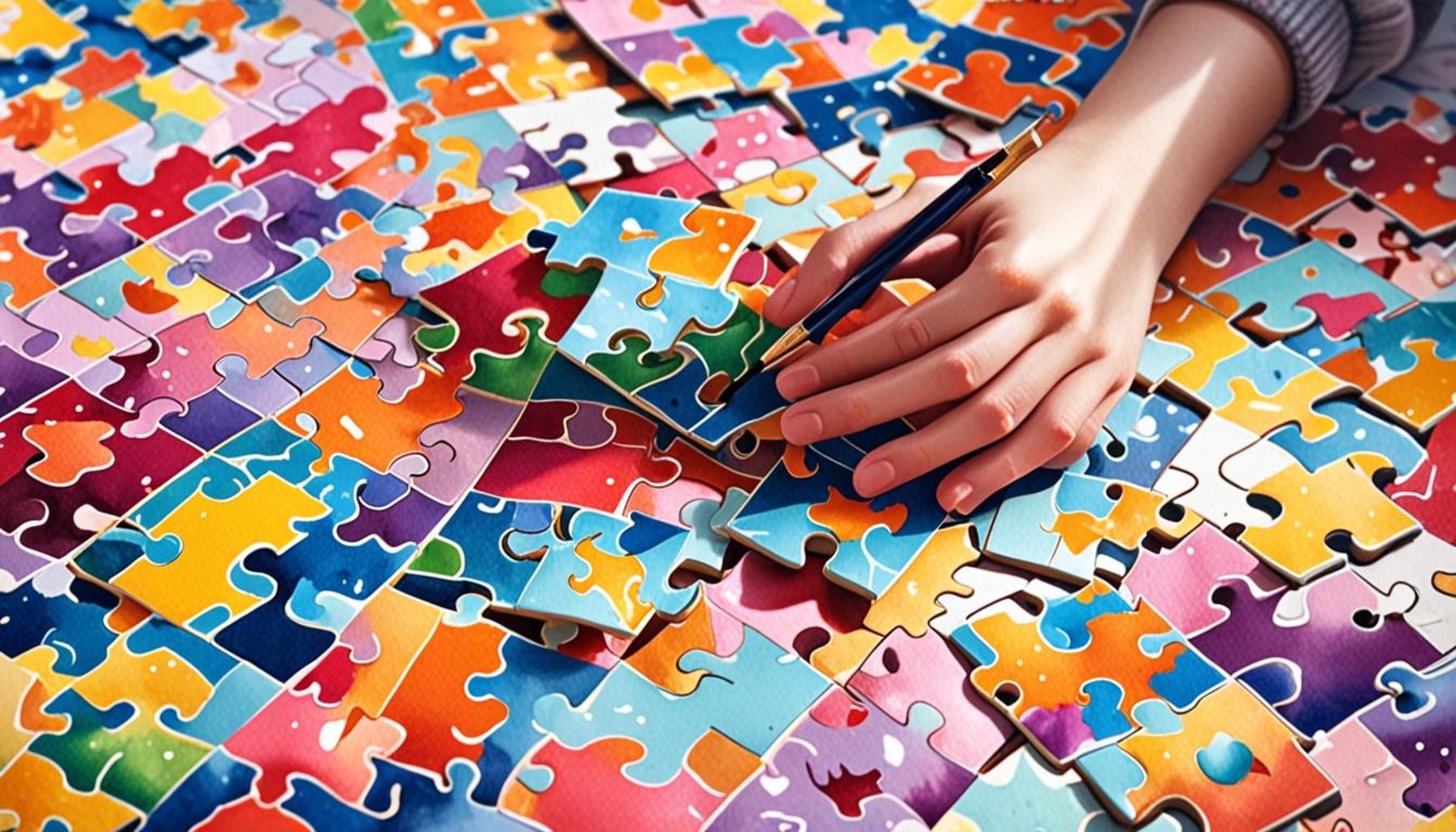
The impact of crosswords and puzzles on mental agility and memory
Cognitive Enhancement through Puzzles
In an age where mental acuity is frequently challenged by fast-paced lifestyles and overwhelming amounts of information, crosswords and puzzles have emerged as invaluable tools for cognitive enhancement. These engaging brain-teasers provide more than just a leisurely pastime; they play a crucial role in maintaining mental agility and improving memory retention across various demographics.
Research has consistently demonstrated that regular engagement with puzzles can lead to significant improvements in cognitive function. For example, a study published in the journal “Neuropsychology” indicated that individuals who regularly solve puzzles exhibit not only enhanced reasoning and problem-solving skills but also improved memory capabilities. The mental exercise involved in these activities activates different regions of the brain, promoting neural plasticity—the brain’s ability to adapt and reorganize itself.
- Enhanced Problem-Solving Skills: Puzzles necessitate critical thinking and strategic planning, pushing individuals to approach challenges from different angles. For instance, completing a jigsaw puzzle requires an understanding of spatial relationships and the ability to foresee how pieces fit together.
- Increased Vocabulary: Crosswords offer exposure to new words and their definitions, making them excellent for language development. Many adults find enjoyment in tackling themed crosswords that relate to pop culture, history, or science, which not only boosts their vocabulary but also keeps them informed.
- Memory Boost: The process of recalling words, numbers, or patterns while solving puzzles exercises memory. Regularly tackling these tasks can lead to improved recall abilities, which is particularly beneficial for older adults aiming to stave off cognitive decline.
The appeal of puzzles spans across all age groups, providing a versatile platform for skill development. Children often delight in colorful, themed puzzles that enhance their critical thinking and hand-eye coordination, while adults tend to enjoy solving daily crosswords in their favorite newspapers or learning apps during their morning commutes. Seniors, on the other hand, might gravitate towards complex Sudoku or logic puzzles, which engage their reasoning skills and encourage a sense of accomplishment.
Moreover, research conducted by the University of Michigan found that older adults who engaged in cognitively stimulating activities, including puzzles, had a 63% lower risk of developing dementia, underscoring the importance of such mental workouts.
As we delve deeper into this compelling subject, it becomes evident that the impact of crosswords and puzzles transcends mere entertainment. Understanding their influence on cognitive function, mental agility, and memory offers valuable insights into a straightforward yet effective approach to enhancing cognitive health. As these activities continue to captivate minds of all ages, they serve as a reminder of the powerful benefits of playful learning.
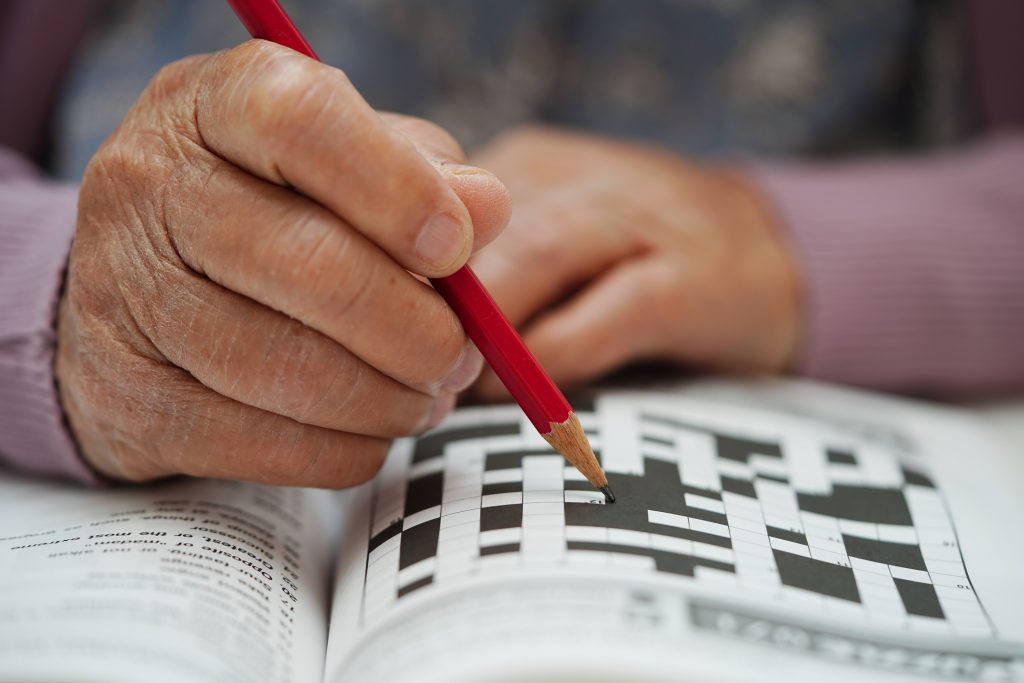
DIVE DEEPER: Click here for powerful memory-boosting strategies
Unlocking Cognitive Potential
The influence of crosswords and puzzles on mental agility and memory is more profound than many may realize. Engaging in these activities not only provides entertainment but also serves as a workout for the brain. The structured challenges of puzzles stimulate various cognitive functions, laying the groundwork for enhanced memory performance and sharper mental acuity.
According to a prominent study published in “Psychological Science,” older adults who frequently engage in puzzles demonstrate improved verbal skills and enhanced working memory over time. This research indicates that the brain requires regular intellectual stimulation to fend off the cognitive decline often associated with aging. By solving crosswords, individuals are actively exercising their memory and problem-solving capabilities, cultivating a sharper mind throughout the years.
- Improving Short-Term Memory: The act of solving a puzzle challenges the brain’s ability to retain and manipulate information in the short term. For instance, while working on a crossword, participants must recall clues and fill in answers, activating their cognitive faculties in a way that strengthens their memory retention.
- Boosting Long-Term Memory: Frequent engagement with puzzles encourages the formation of neural connections that enhance long-term memory. Studies reveal that older adults who regularly solve complex puzzles show less cognitive decline and better overall mental performance compared to their peers who do not.
- Sharpening Concentration: Puzzles require sustained attention and focus, skills that are becoming increasingly important in our distraction-riddled world. Completing a crossword or Sudoku demands a single-mindedness that enhances one’s ability to concentrate on tasks without succumbing to distractions.
Children, too, benefit from puzzle-solving activities. Through interactive crossword games or logic puzzles, young minds learn critical thinking and hone their analytical skills. Educational programs across the United States frequently incorporate puzzles into their curricula to stimulate student engagement and bolster cognitive development. This interactive approach not only makes learning enjoyable but also supports the acquisition of essential life skills.
Furthermore, the communal aspect of puzzle-solving cannot be overlooked. Whether competing in puzzle tournaments or collaborating with friends and family to complete a jigsaw, these activities foster social interactions that can lead to improved mental health. Participating in such communal exercises encourages individuals to share strategies, enhancing both social bonding and cognitive stimulation.
As we further explore the intriguing relationship between crosswords, puzzles, and mental agility, it becomes evident that these activities offer a unique blend of stimulation and enjoyment. The benefits extend beyond merely being enjoyable pastimes; they serve as crucial instruments for cognitive preservation, bridging the gap between play and profound mental enhancement.
| Category | Details |
|---|---|
| Cognitive Benefits | Engaging in crosswords stimulates various brain regions leading to enhanced problem-solving abilities and improved critical thinking. |
| Memory Improvement | Regularly solving puzzles has been linked to a significant reduction in memory loss and can ward off dementia symptoms in older adults. |
| Stress Relief | Both crosswords and puzzles serve as an effective way to reduce stress levels, allowing for mental downtime and relaxation. |
| Social Interaction | These activities encourage collaboration and discussion, promoting social bonds in family and friend groups. |
The world of crosswords and puzzles opens avenues to explore the cognitive and social benefits they bring to users. Research indicates that such activities significantly enhance mental agility, making problem-solving more instinctive. Furthermore, there are profound effects on memory, particularly in older individuals, where consistent engagement in these exercises can stave off cognitive decline. It is recommended that enthusiasts not only indulge in these mind-bending challenges alone but also share them with others, creating an environment rich in interaction and discussion. As you delve deeper into the topic, consider how these seemingly simple games can yield vast benefits for your mental health and social skills.
DISCOVER MORE: Click here to enhance your understanding
Cognitive Benefits and Brain Health
Among the many cognitive enhancements associated with crosswords and puzzles, one of the most remarkable is their capacity to promote neuroplasticity, the brain’s ability to reorganize itself by forming new neural connections throughout life. This adaptability is crucial, especially as one ages. Engaging regularly in crossword activities tends to create a robust network of pathways in the brain, enabling quicker thinking, better decision-making, and improved problem-solving skills.
Recent findings in neuroscience suggest that implementing brain games, including crosswords and logic puzzles, can lead to a significant decrease in the risk of developing neurodegenerative diseases such as Alzheimer’s. A longitudinal study conducted by researchers at the University of California found that individuals who regularly engaged in puzzles during their middle age exhibited a marked reduction in the onset of dementia-related symptoms compared to those who were less mentally active.
- Enhancing Vocabulary and Language Skills: Engaging in crosswords empowers individuals to discover new words and meanings, contributing to an expansive vocabulary. This linguistic enrichment is particularly beneficial for students and professionals aiming to strengthen their communication abilities. Regularly solving crosswords can also polish one’s writing skills, as an enriched vocabulary allows for more nuanced expression.
- Strengthening Logical Reasoning: Many puzzles, such as Sudoku and logic grids, require strategic thinking and logical deduction. These skills translate effectively to everyday problem-solving scenarios, whether in a personal or professional context. For example, understanding complex concepts in mathematics or science can be made easier through the analytical thinking developed from logical puzzles.
- Reducing Mental Fatigue: While it may seem counterintuitive, the act of solving puzzles can actually alleviate mental fatigue. Instead of feeling overwhelmed, individuals often report a rejuvenated sense of focus and energy post-puzzle. The engagement required in these activities shifts the brain’s attention, leading to enhanced mental clarity.
Beyond individual benefits, the impact of puzzles extends into community realms. Local libraries and community centers across the United States frequently organize puzzle-solving events or clubs, encouraging people to gather for a shared purpose. This not only highlights the role of crosswords and puzzles in fostering social connectivity but also the support of collective cognitive gains. The social aspect alleviates feelings of isolation—an especially vital factor for older adults—and promotes active aging through continuous learning and interaction.
Furthermore, as technology continues to advance, the digital landscape is embracing the world of puzzles. Access to mobile crossword apps and online puzzle platforms expands the reach, allowing people of all ages to challenge themselves anytime, anywhere. The convenience of technology serves to regularly engage users, reinforcing the cognitive benefits of puzzles without the constraints of time and physical space.
Ultimately, as new research aligns with the experiences of countless individuals, the impact of crosswords and puzzles on mental agility and memory presents an accessible yet powerful tool for enhancing cognitive health. Far from mere distractions, these activities reflect a proactive approach to nurturing and preserving the mind’s capabilities in the face of life’s challenges.
DISCOVER MORE: Click here for insightful strategies
Conclusion
In summary, the profound impact of crosswords and puzzles on mental agility and memory cannot be overstated. These engaging activities serve as crucial tools for cognitive enhancement, promoting neuroplasticity that bolsters memory retention and facilitates a quicker thought process. Through consistent engagement, individuals not only enhance their vocabulary and logical reasoning skills but also actively reduce the risks associated with neurodegenerative diseases like Alzheimer’s.
Moreover, the social interactions fostered by group puzzle-solving events contribute to a sense of community, alleviating loneliness and aiding mental well-being, especially among older adults. This communal aspect demonstrates how puzzles can enhance both mental acuity and social connectivity, turning an individual pastime into a valuable group experience.
The advent of technology further amplifies accessibility, with mobile apps and online platforms allowing users of all ages to engage with puzzles at their convenience. This availability encourages a culture of lifelong learning and cognitive resilience, making it easier than ever to incorporate brain games into daily routines.
Ultimately, as we navigate through life’s complexities, embracing the cognitive benefits of crosswords and puzzles presents a proactive approach to maintaining our mental health. By integrating these activities into our lifestyles, we have the opportunity to nurture our minds, protect our cognitive functions, and perhaps even rediscover the joy of problem-solving and discovery. The journey of puzzling not only sharpens our intellect but enriches our lives in many unexpected ways.